



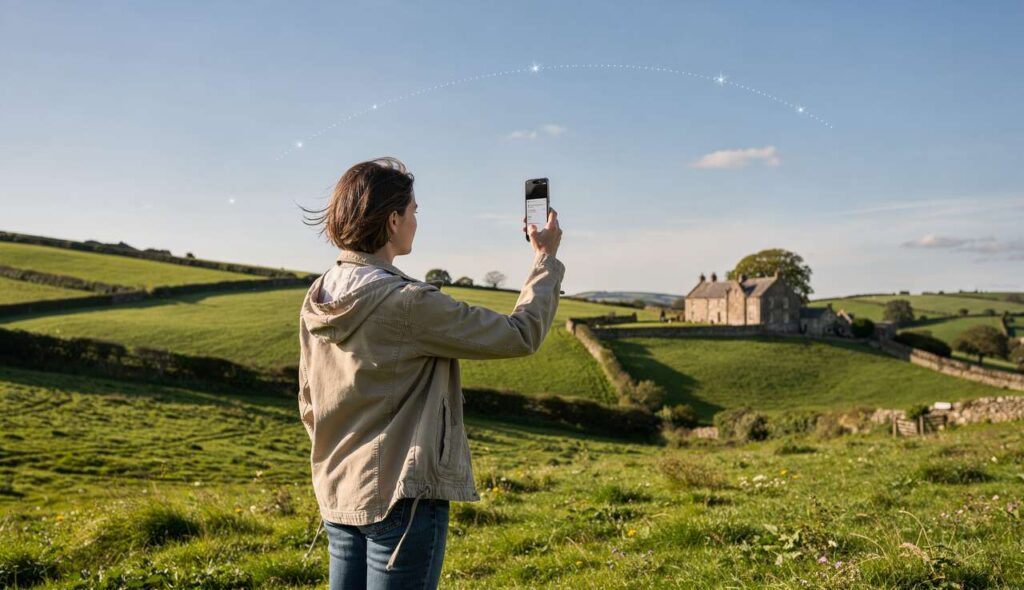
Mobile connectivity reaches new heights as O2 and SpaceX Starlink join forces to bring satellite text messaging capabilities to standard smartphones throughout the United Kingdom. This groundbreaking collaboration eliminates the need for specialized equipment, allowing everyday mobile users to send and receive text messages even in areas where traditional cellular networks fail to reach. The partnership represents a significant leap forward in telecommunications infrastructure, addressing long-standing connectivity challenges faced by millions across remote and rural regions.
Presentation of the O2 and Starlink partnership
Strategic alliance between telecommunications giants
The collaboration between O2, one of the UK’s leading mobile network operators, and SpaceX’s Starlink satellite constellation marks a pivotal moment in telecommunications history. This partnership leverages Starlink’s extensive network of low Earth orbit satellites to provide backup connectivity for O2 customers when terrestrial cell towers are unavailable. The agreement positions O2 as a pioneer among UK carriers in adopting satellite-based messaging technology for consumer smartphones.
Technical infrastructure and deployment
The partnership utilizes Starlink’s second-generation satellites equipped with specialized antennas designed to communicate directly with unmodified mobile devices. Key components of this infrastructure include:
- Over 6,000 low Earth orbit satellites providing coverage across the UK
- Direct-to-cell technology enabling standard smartphones to connect without hardware modifications
- Integration with O2’s existing network infrastructure for seamless handoffs
- Software updates deployed to compatible devices through regular carrier updates
The rollout strategy focuses initially on text messaging services before expanding to voice calls and data transmission in subsequent phases. This measured approach ensures network stability while gradually increasing capacity to handle more demanding communication types.
Understanding the technical foundation of this partnership naturally leads to examining the mechanics behind satellite messaging itself.
How satellite messaging works
Direct-to-cell satellite communication
The technology behind satellite messaging for standard smartphones relies on sophisticated signal processing and network coordination. Unlike traditional satellite phones requiring bulky external antennas, this system uses the existing cellular radio within smartphones to establish connections with orbiting satellites. The satellites essentially function as cell towers in space, receiving and transmitting signals using the same LTE protocols that phones already support.
Signal transmission process
When a smartphone cannot detect terrestrial cell towers, it automatically searches for available satellite connections. The transmission process involves several stages:
| Stage | Process | Duration |
|---|---|---|
| Detection | Phone identifies satellite signal | 5-10 seconds |
| Authentication | Network verifies subscriber credentials | 2-3 seconds |
| Message transmission | Data packets sent to satellite | 10-30 seconds |
| Ground relay | Satellite forwards to terrestrial network | 1-2 seconds |
Overcoming technical challenges
Several obstacles required innovative solutions to make satellite connectivity feasible for consumer devices. The primary challenge involves the significant distance between satellites and ground-based phones, which can exceed 500 kilometers. This distance introduces signal delay and requires powerful amplification. Additionally, satellites move rapidly across the sky, necessitating sophisticated beam-steering technology to maintain connections as phones transition between different satellites overhead.
These technical capabilities translate into tangible advantages for everyday smartphone users across multiple scenarios.
Benefits of satellite messaging on smartphones
Enhanced emergency communication
The most critical advantage of satellite-enabled text messaging lies in emergency situations where traditional networks are unavailable or overloaded. During natural disasters, remote accidents, or infrastructure failures, users can still contact emergency services and loved ones. This capability has potentially life-saving implications for hikers, rural residents, and anyone venturing beyond conventional coverage areas.
Coverage in remote and rural areas
Approximately 15 percent of the UK’s geographic area lacks reliable mobile coverage, affecting millions of residents and visitors. Satellite messaging addresses this connectivity gap by providing service in:
- Mountainous regions across Scotland and Wales
- Remote coastal areas and islands
- Rural farming communities with limited infrastructure
- National parks and wilderness areas
- Transportation corridors through sparsely populated regions
Economic and social implications
Beyond individual convenience, universal connectivity supports economic development in underserved areas. Businesses operating in remote locations gain reliable communication channels, while tourism sectors benefit from enhanced visitor safety. The technology also reduces the digital divide between urban and rural populations, ensuring equal access to emergency services and basic communication regardless of location.
These widespread benefits create substantial changes in how UK residents experience mobile connectivity daily.
Impact on users in the UK
Accessibility and device compatibility
The service’s rollout prioritizes broad device compatibility without requiring new hardware purchases. Most smartphones manufactured after 2022 support the necessary LTE bands and software capabilities. O2 plans to activate the feature through carrier updates, making it accessible to millions of existing customers without additional fees for basic text messaging services.
User experience considerations
While satellite messaging provides crucial backup connectivity, users should understand certain limitations compared to traditional cellular service. Message delivery times range from several seconds to a few minutes depending on satellite availability and atmospheric conditions. The service currently supports text-only communication, with multimedia messaging and data services planned for future updates. Users must also maintain a clear view of the sky, as buildings and dense foliage can obstruct satellite signals.
Regulatory and safety aspects
UK telecommunications regulators have approved the service following extensive testing to ensure it meets safety standards and does not interfere with existing communication systems. Emergency services integration allows satellite-transmitted messages to reach 999 operators with location data, improving response times in remote areas. Privacy protections mirror those of standard cellular communications, with end-to-end encryption available for compatible messaging applications.
As this technology matures and expands, it opens doors to even more ambitious developments in connected communications.
Future prospects for space and mobile technology
Expansion of satellite services
The current text messaging capability represents only the beginning of satellite-enabled mobile services. SpaceX and O2 have outlined a development roadmap that includes voice calling by late 2025 and broadband data services by 2026. These enhancements will progressively transform satellite connectivity from an emergency backup into a viable alternative for everyday mobile usage in areas where terrestrial infrastructure remains economically unfeasible.
Industry competition and innovation
Other mobile carriers and satellite operators are developing competing systems, driving rapid innovation in the sector. This competition benefits consumers through:
- Improved service quality and reduced latency
- Competitive pricing structures
- Expanded coverage areas and capacity
- Integration with emerging technologies like 5G and beyond
Long-term implications for connectivity
The convergence of terrestrial and satellite networks fundamentally reshapes telecommunications architecture. Future smartphones may seamlessly switch between cell towers and satellites without user intervention, creating truly global connectivity. This hybrid approach could eventually eliminate coverage gaps entirely, ensuring communication access anywhere on Earth’s surface. The technology also supports Internet of Things applications, enabling remote sensors and devices in agriculture, environmental monitoring, and infrastructure management to maintain constant connectivity regardless of location.
The partnership between O2 and SpaceX Starlink establishes a new standard for mobile connectivity, demonstrating that satellite technology can complement traditional cellular networks to provide comprehensive coverage across the United Kingdom. By enabling standard smartphones to send text messages via satellite, this collaboration addresses critical safety concerns while laying groundwork for more advanced services. As the technology evolves and competitors enter the market, users can expect increasingly seamless integration between terrestrial and space-based communications, ultimately delivering on the promise of universal connectivity for all.