



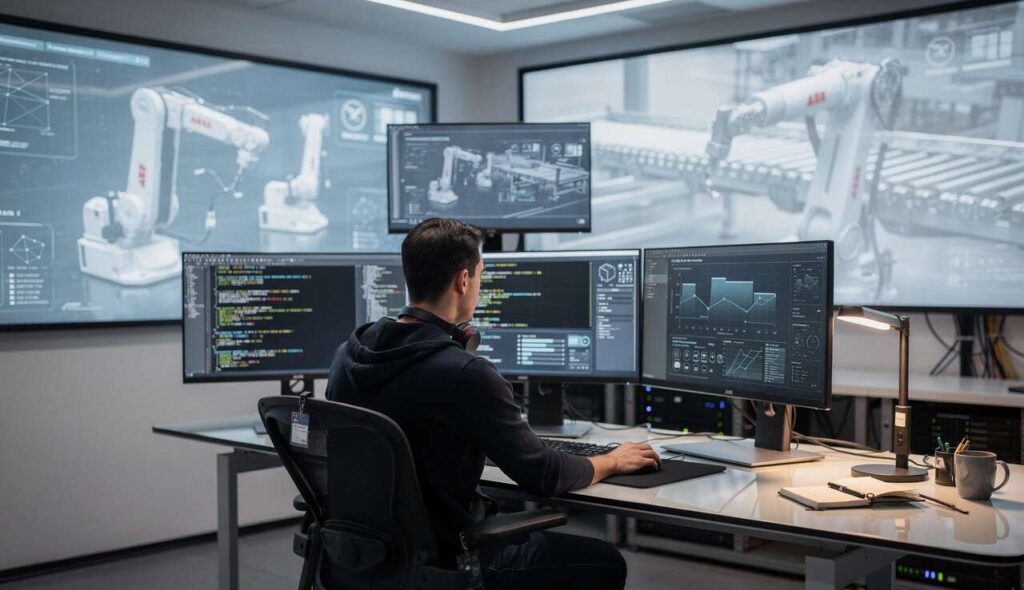
A cybersecurity researcher has uncovered a critical vulnerability affecting thousands of industrial robots manufactured by two leading automation companies. The exposed application programming interface allowed unauthorized access to approximately 7,000 factory robots from ABB and Fanuc, raising serious concerns about the security of manufacturing facilities worldwide. This discovery highlights the growing risks associated with connected industrial equipment and the potential consequences of inadequate security measures in operational technology environments. The vulnerability could have enabled malicious actors to manipulate production lines, steal proprietary manufacturing data, or even cause physical damage to equipment and personnel.
Discovery of the security flaw
How the vulnerability was identified
The security flaw was discovered by an independent cybersecurity researcher who identified an unsecured API endpoint that provided direct access to industrial robot control systems. During routine security testing of internet-connected devices, the researcher noticed that certain manufacturing systems were exposing sensitive interfaces without proper authentication mechanisms. The exposed API allowed anyone with basic technical knowledge to query robot status information and potentially send commands to the affected machines.
The discovery process involved:
- Scanning publicly accessible IP addresses for industrial control systems
- Identifying unprotected API endpoints associated with robot management platforms
- Testing the level of access available without authentication credentials
- Documenting the scope of affected devices across multiple facilities
- Verifying the manufacturers of the vulnerable equipment
Scale of the exposure
The researcher determined that approximately 7,000 industrial robots from ABB and Fanuc were potentially accessible through the exposed API. These robots were located in manufacturing facilities across multiple countries and industries, including automotive production, electronics assembly, and general manufacturing operations. The widespread nature of the vulnerability demonstrated that this was not an isolated incident but rather a systemic security issue affecting how industrial equipment is deployed and managed in connected environments.
| Manufacturer | Estimated affected robots | Primary industries |
|---|---|---|
| ABB | Approximately 3,500 | Automotive, electronics |
| Fanuc | Approximately 3,500 | Manufacturing, assembly |
Understanding the technical aspects of this vulnerability requires examining how the API functioned and what access it provided to potential attackers.
Vulnerability of the exposed API
Technical characteristics of the flaw
The exposed API lacked fundamental security controls that should be standard in any internet-facing industrial system. The interface did not require authentication tokens, API keys, or any form of user verification before granting access to robot control functions. This meant that anyone who discovered the API endpoint could potentially interact with the connected robots without needing to bypass security measures or exploit complex vulnerabilities.
Key technical weaknesses included:
- Absence of authentication requirements for API access
- No encryption for data transmitted between clients and the API
- Publicly routable IP addresses for industrial control systems
- Default configurations that prioritized convenience over security
- Insufficient network segmentation between production systems and the internet
Information accessible through the API
Through the vulnerable API, an attacker could retrieve detailed information about robot operations, including current status, programmed tasks, production schedules, and system configurations. This level of access provided valuable intelligence about manufacturing processes that competitors or malicious actors could exploit. The API also exposed proprietary manufacturing data that companies consider trade secrets, including production rates, quality control parameters, and operational efficiency metrics.
The severity of this vulnerability extends beyond mere data exposure to encompass real-world physical consequences for manufacturing operations.
Potential threats to factories
Operational disruption scenarios
The exposed API created multiple pathways for operational disruption in affected manufacturing facilities. Malicious actors could potentially issue commands to halt production, modify robot programming, or cause equipment to perform unintended actions. Such disruptions could result in significant financial losses due to downtime, damaged products, or compromised quality control processes. In highly automated facilities where robots operate continuously, even brief interruptions can cascade into substantial production delays.
Potential attack scenarios include:
- Sending stop commands to halt production lines during critical manufacturing periods
- Modifying robot movements to produce defective products
- Altering quality control parameters to allow substandard items through inspection
- Extracting proprietary manufacturing processes for industrial espionage
- Installing malicious code to create persistent access for future attacks
Safety implications for workers
Beyond operational concerns, the vulnerability posed serious safety risks to factory personnel working alongside industrial robots. Unauthorized manipulation of robot behavior could cause unexpected movements that endanger workers in proximity to the equipment. Industrial robots operate with significant force and speed, and any deviation from programmed safety protocols could result in workplace injuries or fatalities. The potential for weaponizing industrial equipment through cyber attacks represents a troubling convergence of digital threats and physical harm.
| Threat category | Potential impact | Affected stakeholders |
|---|---|---|
| Production disruption | Financial losses, delivery delays | Manufacturers, customers |
| Data theft | Loss of competitive advantage | Companies, investors |
| Safety incidents | Worker injuries, legal liability | Employees, management |
Following responsible disclosure practices, the researcher contacted both manufacturers to address these critical security concerns.
Response from companies ABB and Fanuc
Initial acknowledgment and investigation
Both ABB and Fanuc acknowledged the security researcher’s findings and initiated immediate investigations into the scope and nature of the vulnerability. The companies worked to identify which specific products and configurations were affected by the exposed API. This process involved reviewing their product lines, examining default security settings, and contacting customers who might have deployed vulnerable systems. The manufacturers emphasized their commitment to industrial cybersecurity and pledged to address the identified weaknesses promptly.
Remediation efforts and customer communication
The companies implemented several remediation measures to address the vulnerability. They released security patches and updated firmware for affected robot control systems that implemented proper authentication mechanisms and encrypted communications. ABB and Fanuc also issued security advisories to their customer base, providing guidance on how to secure existing installations and prevent similar exposures in the future. The manufacturers offered technical support to help facilities implement the necessary security updates with minimal disruption to ongoing operations.
Remediation actions included:
- Releasing security patches for vulnerable robot control software
- Providing configuration guidelines for secure API deployment
- Conducting security audits of customer installations
- Offering training programs on industrial cybersecurity best practices
- Establishing dedicated security response teams for future incidents
While manufacturer responses address immediate vulnerabilities, industrial facilities must implement comprehensive security strategies to protect their operations.
Protection measures for industrials
Network segmentation and access controls
Manufacturing facilities should implement robust network segmentation to isolate industrial control systems from general corporate networks and the internet. This approach limits the attack surface by ensuring that operational technology systems are not directly accessible from untrusted networks. Organizations should establish strict access controls that require multi-factor authentication for any remote access to industrial equipment and maintain detailed logs of all system interactions.
Security best practices for industrial environments
Comprehensive security strategies for industrial operations extend beyond addressing individual vulnerabilities. Facilities should conduct regular security assessments of their operational technology environments, implement continuous monitoring for suspicious activities, and maintain incident response plans specifically designed for industrial systems. Employee training programs should emphasize the unique security challenges of manufacturing environments and the potential consequences of security breaches.
Essential security measures include:
- Implementing firewalls and intrusion detection systems for industrial networks
- Regularly updating and patching all industrial control system software
- Conducting penetration testing of operational technology environments
- Establishing vendor management processes that include security requirements
- Creating backup and recovery procedures for critical industrial systems
- Monitoring network traffic for anomalous patterns or unauthorized access attempts
This incident illustrates broader trends and challenges facing industrial cybersecurity as manufacturing becomes increasingly connected and automated.
Impacts on industrial cybersecurity
Growing convergence of IT and OT security
The exposed API vulnerability demonstrates the increasing convergence of information technology and operational technology security challenges. As manufacturers adopt Industry 4.0 principles and connect previously isolated industrial systems to corporate networks and cloud platforms, they inherit the security vulnerabilities associated with networked computing. This convergence requires organizations to develop integrated security strategies that address both traditional IT threats and the unique requirements of industrial control systems.
Regulatory and industry implications
This security incident may accelerate regulatory attention to industrial cybersecurity standards and compliance requirements. Governments and industry organizations are increasingly recognizing that vulnerabilities in critical manufacturing infrastructure pose national security and economic risks. The discovery of such widespread exposure in major manufacturer equipment could prompt new regulations requiring minimum security standards for industrial control systems and mandatory reporting of cybersecurity incidents affecting operational technology.
| Impact area | Short-term effects | Long-term implications |
|---|---|---|
| Security awareness | Increased attention to OT security | Industry-wide security improvements |
| Investment priorities | Emergency security upgrades | Systematic security architecture redesign |
| Regulatory landscape | Enhanced scrutiny of manufacturers | New compliance requirements |
The discovery of this vulnerability affecting thousands of industrial robots from ABB and Fanuc serves as a critical reminder of the security challenges facing modern manufacturing. The incident highlights the need for manufacturers to prioritize cybersecurity in product design, for industrial facilities to implement comprehensive security measures, and for the industry to develop standardized approaches to protecting operational technology environments. As manufacturing continues its digital transformation, addressing these security concerns becomes essential to maintaining safe, reliable, and competitive industrial operations. The collaborative response between security researchers, equipment manufacturers, and industrial operators demonstrates the importance of shared responsibility in protecting critical infrastructure from cyber threats.