



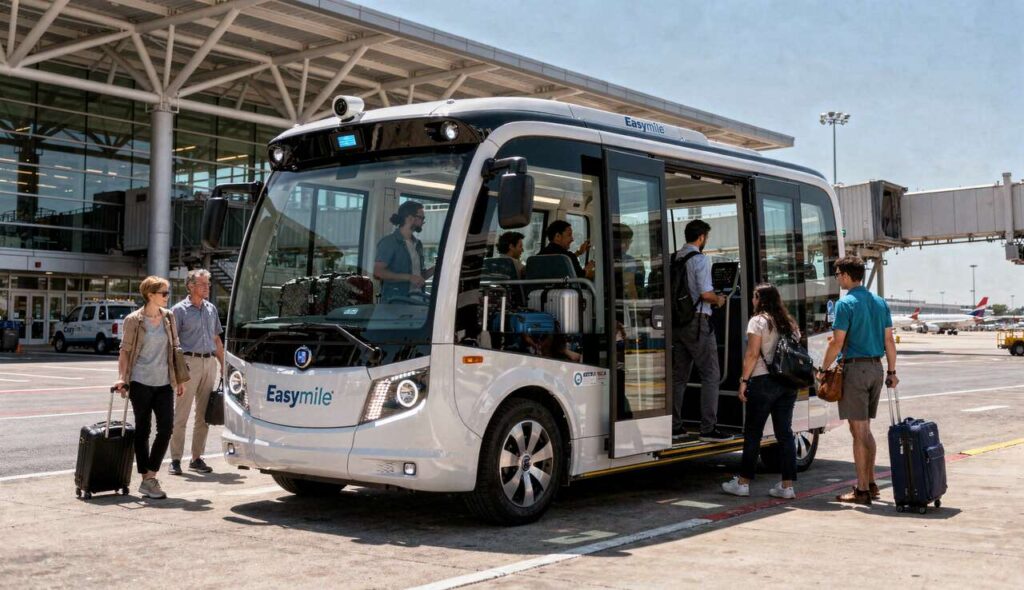
Newark Liberty International Airport is taking a significant step toward modernizing ground transportation with the introduction of autonomous shuttle buses. Starting this spring, the airport will begin testing self-driving vehicles manufactured by EasyMile, a leading company in autonomous mobility solutions. These shuttles will operate across terminals, providing passengers with a glimpse into the future of airport transportation. The pilot program represents a major investment in cutting-edge technology designed to improve efficiency, reduce congestion, and enhance the overall travel experience for millions of annual visitors.
Introduction of autonomous shuttles at Newark Liberty Airport
Strategic deployment across terminal facilities
Newark Liberty International Airport has announced the deployment of autonomous shuttle buses that will transport passengers between terminals and other key locations within the airport complex. The testing phase will commence this spring, with vehicles operating on designated routes that connect Terminal A, Terminal B, Terminal C, and parking facilities. This initiative positions Newark as one of the first major airports in the United States to implement fully autonomous ground transportation on such a scale.
The shuttles will operate on predetermined pathways equipped with advanced infrastructure to support autonomous navigation. Airport officials have emphasized that the program aims to:
- Reduce passenger wait times between terminals
- Decrease reliance on traditional bus services
- Lower carbon emissions through electric vehicle technology
- Provide a seamless connection for travelers with tight connections
Timeline and phased implementation
The testing program will unfold in multiple phases throughout the spring and summer months. Initial operations will feature a limited number of vehicles running during off-peak hours to gather operational data and refine system performance. As confidence in the technology grows, the Port Authority of New York and New Jersey plans to expand service hours and increase the fleet size. The phased approach allows for continuous evaluation and adjustment based on real-world performance metrics and passenger feedback.
| Phase | Timeline | Scope |
|---|---|---|
| Phase 1 | Early Spring | Limited routes, off-peak hours |
| Phase 2 | Late Spring | Extended hours, additional vehicles |
| Phase 3 | Summer | Full operational capacity |
This structured rollout ensures that safety remains the top priority while allowing the airport to gradually integrate autonomous technology into daily operations. The success of this program could pave the way for similar implementations at other major transportation hubs.
An innovative partnership with EasyMile
EasyMile’s expertise in autonomous mobility
The Port Authority has selected EasyMile, a French company with extensive experience in autonomous vehicle technology, as its partner for this groundbreaking initiative. EasyMile has deployed its autonomous shuttles in more than 300 locations worldwide, including airports, corporate campuses, and urban environments. The company’s EZ10 shuttle model has accumulated millions of miles in autonomous operation, demonstrating reliability and safety across diverse operating conditions.
EasyMile’s technology incorporates multiple layers of redundancy and sophisticated sensor systems that enable vehicles to navigate complex environments. The company’s track record includes successful deployments at:
- Singapore’s Changi Airport
- Lyon-Saint Exupéry Airport in France
- Various university campuses across North America
- Smart city projects in Europe and Asia
Customization for airport environment
The shuttles deployed at Newark have been specifically configured to meet the unique demands of airport operations. Each vehicle can accommodate up to 12 passengers and features dedicated space for luggage storage. The shuttles operate entirely on electric power, aligning with the Port Authority’s sustainability goals and reducing the airport’s carbon footprint. Advanced climate control systems ensure passenger comfort regardless of weather conditions.
EasyMile has worked closely with airport officials to map routes, identify potential obstacles, and integrate the shuttles with existing transportation infrastructure. This collaboration ensures that the autonomous vehicles can seamlessly coexist with traditional buses, passenger vehicles, and service equipment that share airport roadways. Understanding this technical foundation naturally leads to examining how these vehicles actually function in practice.
Operation of autonomous shuttles
Advanced sensor technology and navigation systems
The autonomous shuttles utilize a comprehensive array of sensors and cameras to perceive their environment and make real-time navigation decisions. Each vehicle is equipped with LiDAR (Light Detection and Ranging) systems that create detailed three-dimensional maps of surrounding areas. These sensors work in conjunction with GPS technology, cameras, and ultrasonic sensors to provide complete situational awareness. The vehicles can detect obstacles, pedestrians, and other vehicles from significant distances, allowing for smooth and safe operation.
The navigation system relies on:
- High-definition mapping of designated routes
- Real-time obstacle detection and avoidance algorithms
- Vehicle-to-infrastructure communication systems
- Redundant safety systems that enable immediate stopping if necessary
Operating parameters and speed
During the testing phase, the shuttles will operate at speeds ranging from 10 to 15 miles per hour, prioritizing safety over speed. This conservative approach allows passengers to board and disembark comfortably while ensuring the vehicles can respond quickly to unexpected situations. The shuttles follow predetermined routes with designated stops at each terminal and key airport facilities. Passengers can board at clearly marked stations equipped with digital displays showing arrival times and route information.
Each shuttle operates with a safety attendant on board during the testing phase. This trained professional monitors system performance and can intervene if necessary, though the vehicles are designed to operate autonomously under normal conditions. The attendant also assists passengers with questions and provides feedback to engineers working to optimize system performance. These operational details directly influence how passengers will experience this new transportation option.
Impact on passenger experience
Enhanced convenience and reduced wait times
The introduction of autonomous shuttles promises to significantly improve the passenger experience at Newark Liberty Airport. Traditional inter-terminal transportation often involves unpredictable wait times and crowded buses, particularly during peak travel periods. The autonomous shuttles will operate on fixed schedules with shorter intervals between vehicles, reducing average wait times to just a few minutes. Passengers with tight connections will benefit from more reliable transportation options that help them reach their gates on time.
The shuttles offer several passenger-focused features:
- Real-time tracking through mobile applications
- Accessible boarding for passengers with disabilities
- Climate-controlled interiors for year-round comfort
- Ample luggage storage space
- Quiet, smooth operation without engine noise
Accessibility and inclusivity
Airport officials have emphasized that the autonomous shuttles are designed with universal accessibility in mind. Each vehicle features low-floor entry, wide doorways, and designated spaces for passengers using wheelchairs or other mobility devices. Audio and visual announcements provide information about stops and routes in multiple languages. The shuttles represent a more inclusive transportation option compared to traditional buses, which can be challenging for some passengers to board and navigate.
| Feature | Traditional Bus | Autonomous Shuttle |
|---|---|---|
| Average Wait Time | 10-15 minutes | 3-5 minutes |
| Capacity | 40 passengers | 12 passengers |
| Accessibility | Variable | Full ADA compliance |
These improvements in passenger experience naturally raise questions about the safety measures that make such innovation possible.
Safety and reliability of autonomous vehicles
Comprehensive testing and certification
Before the shuttles begin carrying passengers, they undergo rigorous safety testing that exceeds federal and state requirements. EasyMile and the Port Authority have conducted extensive simulations and closed-course testing to validate system performance under various conditions. The vehicles have been tested in rain, fog, and other challenging weather conditions to ensure reliable operation throughout the year. Federal regulators have reviewed the technology and granted approval for the pilot program based on demonstrated safety performance.
The safety protocol includes:
- Daily pre-operation inspections by certified technicians
- Continuous monitoring of vehicle systems during operation
- Immediate alerts to control centers if anomalies are detected
- Regular software updates to improve performance and address potential issues
Emergency protocols and human oversight
Despite the autonomous nature of the vehicles, human oversight remains a critical component of the safety system. Each shuttle operates with a safety attendant who can take control if necessary, though the autonomous systems are designed to handle the vast majority of situations without intervention. A central control room monitors all vehicles in real-time, with operators ready to provide guidance or remotely stop vehicles if needed. Emergency stop buttons are located throughout each shuttle, accessible to both passengers and attendants.
The vehicles are programmed to respond conservatively to uncertain situations, prioritizing passenger safety above all other considerations. If sensors detect an obstacle or potential hazard, the shuttle will slow or stop until the situation is resolved. This cautious approach has proven effective in other deployments worldwide, where EasyMile shuttles have maintained an exemplary safety record over millions of miles of operation. These safety measures provide the foundation for broader implementation of autonomous technology in transportation settings.
Future prospects for airport transportation
Expansion potential within Newark and beyond
If the pilot program proves successful, the Port Authority plans to expand autonomous shuttle service throughout Newark Liberty Airport and potentially to other facilities it operates. Future phases could include routes connecting the airport to nearby hotels, rental car facilities, and transit stations. The technology could eventually replace or supplement traditional bus services, reducing operational costs while improving service frequency and reliability. Airport officials are already in discussions with EasyMile about acquiring additional vehicles to support expanded operations.
Potential expansion areas include:
- Employee transportation between parking areas and terminals
- Cargo and baggage handling operations
- Connections to regional rail and bus terminals
- Integration with other Port Authority facilities
Industry-wide implications
The Newark pilot program is being closely watched by airports and transportation agencies across the country and around the world. Success at one of the nation’s busiest airports could accelerate adoption of autonomous technology at other major hubs. The program provides valuable data on how autonomous vehicles perform in complex, high-traffic environments with diverse passenger populations. Lessons learned at Newark will inform future deployments and help establish best practices for autonomous airport transportation.
Beyond airports, the technology has applications in urban transit systems, corporate campuses, and planned communities. As autonomous vehicle technology matures and public acceptance grows, these shuttles could become a common sight in cities worldwide, providing efficient, sustainable transportation solutions that reduce congestion and improve mobility for all residents.
Newark Liberty Airport’s autonomous shuttle program represents a significant milestone in the evolution of airport transportation. By partnering with EasyMile to deploy cutting-edge autonomous vehicles, the Port Authority is demonstrating leadership in adopting innovative solutions to age-old challenges. The shuttles promise to enhance passenger convenience, improve accessibility, and reduce environmental impact while maintaining the highest safety standards. As testing progresses this spring, the aviation industry will gain valuable insights into the practical applications of autonomous technology in complex operational environments. The success of this initiative could reshape how millions of travelers navigate airports and inspire similar programs at transportation hubs worldwide.