



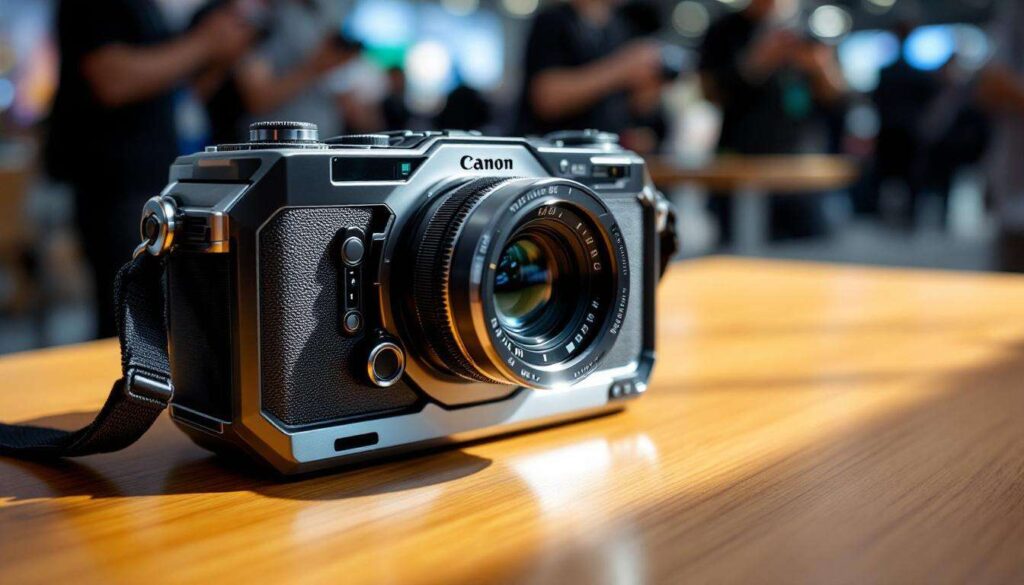
Canon has captured the attention of photography enthusiasts worldwide by presenting an innovative analog concept camera at CP Plus 2026 in Japan. This announcement marks a significant moment for the industry, as the company demonstrates its commitment to preserving traditional photography methods while incorporating modern design elements. The concept camera features an optical viewfinder and manual focus capabilities, appealing to photographers who value hands-on control and tactile engagement with their equipment. By blending classic analog principles with contemporary manufacturing techniques, Canon addresses a growing demand among professionals and hobbyists seeking authentic photographic experiences.
Introducing Canon’s new analog camera
Design philosophy and aesthetic appeal
The concept camera showcases Canon’s dedication to timeless design principles that defined the golden era of film photography. The body construction emphasizes ergonomic handling with precision-machined metal components that provide durability and professional-grade reliability. The camera’s exterior features tactile dials and controls positioned for intuitive operation, allowing photographers to adjust settings without removing their eye from the viewfinder.
Key design elements include:
- Robust metal chassis with weather-resistant sealing
- Mechanical shutter mechanism for reliable operation
- Classic control layout with dedicated exposure dials
- Compact form factor suitable for extended shooting sessions
- Interchangeable lens mount compatible with existing Canon optics
Target audience and market positioning
Canon has strategically positioned this concept camera to appeal to experienced photographers who appreciate the deliberate pace and methodical approach required by analog equipment. The camera targets professionals seeking backup film bodies, educators teaching fundamental photography principles, and enthusiasts collecting vintage-style equipment. This positioning reflects broader market trends showing renewed interest in analog photography among younger generations discovering film for the first time.
Understanding the technical capabilities requires examining the specific features Canon has incorporated into this innovative design.
Technical specifications and innovations
Core mechanical components
The concept camera utilizes a fully mechanical shutter system capable of operating without battery power for basic functions. This engineering choice ensures reliability in diverse shooting conditions and appeals to photographers who value equipment independence from electronic systems. The shutter speed range spans from 1 second to 1/4000th of a second, providing versatility for various lighting scenarios and creative applications.
| Specification | Details |
|---|---|
| Shutter Type | Mechanical focal plane |
| Speed Range | 1s to 1/4000s plus Bulb mode |
| Film Format | 35mm standard cassette |
| ISO Range | 25 to 6400 (manual setting) |
| Weight | Approximately 650g (body only) |
Material selection and build quality
Canon engineers selected premium materials throughout the construction process, including brass for internal mechanisms and magnesium alloy for the external chassis. These choices contribute to exceptional durability while maintaining reasonable weight distribution. The camera features precision-ground glass elements in the viewfinder system, ensuring accurate composition and focus verification.
The optical viewfinder represents one of the most significant features distinguishing this camera from digital alternatives.
The integration of the optical viewfinder
Viewfinder design and functionality
The optical viewfinder system provides photographers with a direct, unmediated view of their subject through the lens. Canon has implemented a pentaprism design that delivers 100% frame coverage with 0.95x magnification, ensuring accurate composition without parallax errors. The viewfinder includes interchangeable focusing screens, allowing users to customize the viewing experience based on their preferred focusing methods and lens types.
Advantages for traditional photography
Optical viewfinders offer distinct benefits that resonate with analog photography practitioners:
- Zero lag between subject movement and viewfinder display
- No battery drain during composition and framing
- Natural eye relief for comfortable extended viewing
- Accurate color perception without electronic processing
- Compatibility with manual focus assistance tools
The viewfinder design complements the camera’s emphasis on manual control, providing visual feedback that supports precise focusing techniques. This integration creates a cohesive shooting experience centered on photographer skill and intention rather than automated systems.
Manual focus capabilities further enhance the hands-on approach this camera encourages.
Intuitive navigation with manual focus
Focus mechanism and user experience
The manual focus system features a precision-damped focusing ring that provides smooth, controlled adjustments with tactile feedback. Canon has engineered the focus throw to balance speed and accuracy, allowing photographers to achieve critical focus quickly while maintaining fine-tuning capability. The system includes focus distance scales and depth-of-field indicators engraved on lens barrels, providing visual references for zone focusing and hyperfocal distance techniques.
Learning curve and skill development
Manual focus operation requires developed technique and visual judgment that many photographers find rewarding. The camera’s design supports skill acquisition through:
- Split-prism focusing aids in the viewfinder center
- Microprism collar surrounding the split-prism
- Ground glass focusing screen for overall composition
- Depth-of-field preview mechanism for exposure verification
These features create an educational tool for photographers learning fundamental techniques while providing experienced users with familiar, reliable focusing methods. The emphasis on manual operation distinguishes this camera from automated systems and reinforces the deliberate, thoughtful approach associated with analog photography.
Industry professionals and enthusiasts had the opportunity to experience this concept camera firsthand at a major photography trade show.
The reception at CP Plus 2026
Industry response and critical reception
At CP Plus 2026 in Japan, Canon’s concept camera generated significant enthusiasm among attendees and industry observers. Photography journalists praised the camera’s build quality and authentic analog operation, noting that Canon had avoided compromises that might dilute the traditional shooting experience. Professional photographers attending the exhibition expressed appreciation for the thoughtful integration of classic features with modern manufacturing precision.
Demonstration and hands-on experiences
Canon provided extensive demonstration opportunities, allowing visitors to handle the camera and test its functionality with various lens configurations. Attendees noted the following impressions:
- Exceptional build quality with premium materials throughout
- Smooth mechanical operation of all controls and mechanisms
- Bright, clear viewfinder image with excellent edge-to-edge sharpness
- Comfortable ergonomics suitable for extended shooting sessions
- Authentic analog experience without unnecessary electronic features
The positive reception suggests strong market potential for analog equipment that maintains traditional photography values while benefiting from contemporary manufacturing capabilities. This response indicates opportunities for photographers seeking alternatives to digital systems.
Prospects for analog photography enthusiasts
Market trends and consumer interest
The photography industry has witnessed renewed interest in analog equipment, driven by photographers seeking distinctive aesthetic qualities and tangible creative processes. Film sales have increased steadily, and manufacturers have responded by reintroducing discontinued films and developing new emulsions. Canon’s concept camera addresses this market evolution by offering equipment that supports traditional workflows with reliable, professionally-designed tools.
Educational and artistic applications
Beyond commercial photography, this camera concept holds significant value for educational institutions teaching fundamental photography principles. The manual operation requires students to understand exposure relationships, depth of field, and compositional techniques without relying on automated systems. Artists working in analog media gain access to professional-grade equipment designed specifically for their chosen medium, supporting creative vision with dependable tools.
Canon has demonstrated that major manufacturers recognize the ongoing relevance of analog photography and the photographers who practice it. This concept camera represents both homage to photographic heritage and acknowledgment of contemporary demand for authentic, hands-on creative tools. The combination of optical viewfinders, manual focus systems, and mechanical operation creates equipment that rewards skill development and intentional photographic practice. As the industry continues evolving, this approach offers photographers meaningful alternatives to digital workflows while maintaining the technical excellence expected from professional camera manufacturers.