



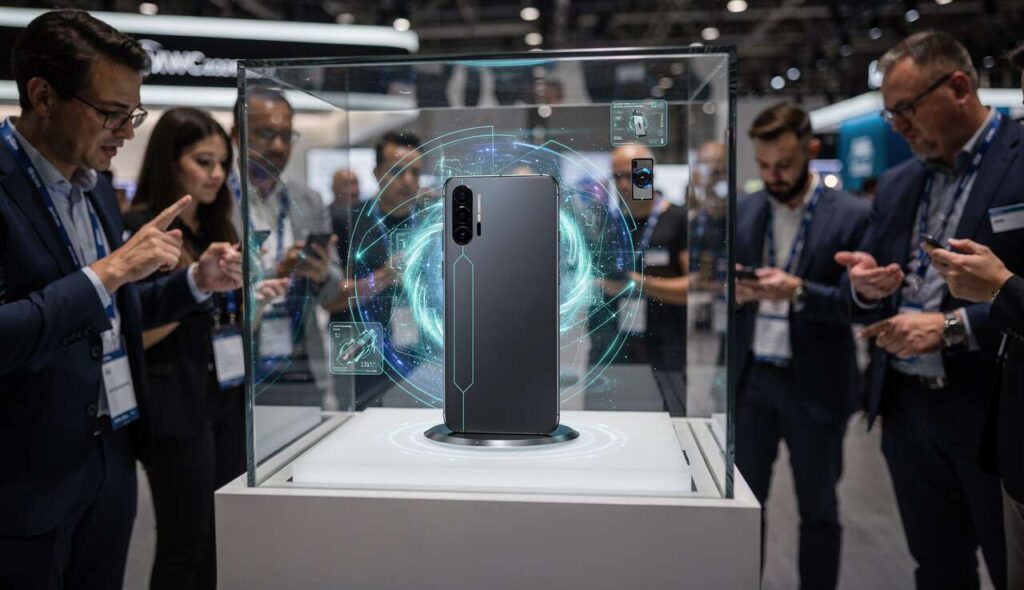
Mobile technology continues to push boundaries as manufacturers race to solve one of the most persistent challenges facing smartphone users: battery life. A Chinese manufacturer has stepped into the spotlight with a groundbreaking prototype that promises to redefine expectations. The device features a revolutionary 12,000mAh silicon-carbon battery, representing a significant leap forward in energy storage technology. This innovation addresses the growing demand for devices that can sustain intensive usage without frequent charging interruptions. The prototype showcases how advanced materials science can transform everyday mobile experiences.
Introduction of the silicon-carbon battery smartphone
Revolutionary battery chemistry
The prototype unveiled by the Chinese manufacturer incorporates silicon-carbon composite technology in its battery design, marking a departure from traditional lithium-ion solutions. This innovative approach combines the high energy density of silicon with the structural stability of carbon materials. The result is a battery that can store significantly more energy within the same physical footprint as conventional batteries.
Silicon-carbon batteries offer several advantages over standard lithium-ion technology:
- Enhanced energy density allowing for larger capacity in compact designs
- Improved thermal stability reducing overheating risks
- Longer cycle life maintaining performance over extended usage periods
- Faster charging capabilities due to improved ion conductivity
Design considerations for high-capacity integration
Integrating a 12,000mAh battery into a smartphone form factor presents unique engineering challenges. The manufacturer has employed advanced packaging techniques to maintain a device profile that remains practical for daily use. The silicon-carbon chemistry enables this capacity without creating an excessively bulky device, addressing concerns that have historically limited battery sizes in smartphones.
Understanding these technical foundations sets the stage for examining the specific capabilities this prototype brings to the market.
Technical specifications of the prototype
Core hardware features
The prototype smartphone extends beyond its impressive battery to include cutting-edge hardware components designed to complement the extended power capacity. The device features a high-performance processor optimized for energy efficiency, ensuring that the substantial battery capacity translates into meaningful usage time rather than merely compensating for power-hungry components.
| Component | Specification |
|---|---|
| Battery Capacity | 12,000mAh silicon-carbon |
| Charging Speed | 120W fast charging |
| Display | 6.8-inch AMOLED |
| Weight | Approximately 240 grams |
Software optimization for extended battery life
The manufacturer has developed proprietary power management software that works in conjunction with the hardware to maximize efficiency. This intelligent system monitors usage patterns and adjusts resource allocation dynamically, ensuring that the battery’s potential is fully realized through smart energy distribution across applications and system processes.
These specifications demonstrate how the prototype balances raw capacity with practical functionality, leading naturally to consideration of the tangible benefits users can expect.
Benefits of the 12,000mAh battery
Extended usage scenarios
The 12,000mAh capacity fundamentally changes how users can interact with their smartphones. Heavy users who typically struggle to maintain charge through a full day can now expect multi-day operation under normal conditions. This capacity supports intensive activities including prolonged video streaming, gaming sessions, and professional photography without the constant anxiety of depleting power reserves.
Practical benefits include:
- Up to three days of moderate usage on a single charge
- Extended travel periods without requiring charging access
- Reduced battery degradation concerns due to fewer charge cycles
- Enhanced reliability for professional and emergency situations
Environmental and economic advantages
Beyond user convenience, the extended battery life offers environmental benefits by reducing the frequency of charging cycles. Fewer charges mean lower electricity consumption over the device’s lifetime. Additionally, the improved longevity of silicon-carbon batteries may extend overall device lifespan, potentially reducing electronic waste as users need not replace devices as frequently due to battery degradation.
These advantages position the prototype favorably when examined alongside existing market offerings.
Comparison with existing models
Current market leaders
Most flagship smartphones currently available feature batteries ranging from 4,000mAh to 6,000mAh, with a few specialized models reaching 7,000mAh. The 12,000mAh prototype represents nearly double the capacity of even the most battery-focused devices currently on the market, establishing a new benchmark for mobile power storage.
| Device Category | Typical Battery Capacity | Prototype Advantage |
|---|---|---|
| Standard Flagship | 4,500-5,000mAh | +140% capacity |
| Battery-focused Models | 6,000-7,000mAh | +71-100% capacity |
| Gaming Phones | 5,500-6,500mAh | +85-118% capacity |
Performance versus portability trade-offs
Traditional high-capacity smartphones often sacrifice portability, with some models exceeding 250 grams and featuring thick profiles. The silicon-carbon technology employed in this prototype maintains a relatively manageable weight and form factor, addressing a common criticism of battery-focused devices. This balance represents a significant achievement in mobile device engineering.
This competitive positioning raises important questions about how such innovation might reshape industry dynamics.
Potential impact on the smartphone market
Shifting consumer expectations
The introduction of a 12,000mAh smartphone has the potential to reset consumer expectations regarding acceptable battery performance. As users become aware that such capacity is technically feasible, demand for improved battery life across all device categories may intensify, pressuring manufacturers to accelerate their own battery technology development programs.
Competitive responses and industry adaptation
Major smartphone manufacturers will likely respond to this development through various strategies:
- Accelerated research into alternative battery chemistries
- Strategic partnerships with battery technology specialists
- Enhanced software optimization to maximize existing battery capabilities
- Marketing emphasis on other differentiating features beyond battery capacity
The ripple effects of this innovation may extend beyond smartphones to tablets, wearables, and other portable electronics, potentially catalyzing broader adoption of silicon-carbon battery technology across consumer electronics categories.
The venue chosen to showcase this breakthrough reflects its significance to the industry.
Presentation at the Mobile World Congress 2026
Strategic significance of the MWC platform
Mobile World Congress represents the premier global event for mobile technology innovation, attracting industry leaders, media representatives, and technology enthusiasts from around the world. The Chinese manufacturer’s decision to unveil this prototype at MWC signals their intention to position the technology as a serious commercial proposition rather than merely a research concept.
Industry reception and future outlook
The prototype has generated substantial interest among conference attendees, with particular attention from industry analysts evaluating the commercial viability of silicon-carbon battery technology. Questions remain regarding production scalability, cost considerations, and the timeline for bringing such devices to market. The manufacturer has indicated that commercial availability may follow within the subsequent product cycle, though specific dates remain unconfirmed.
The unveiling of a smartphone prototype featuring a 12,000mAh silicon-carbon battery represents a significant milestone in mobile technology development. This innovation addresses longstanding consumer frustrations with battery life while demonstrating the practical application of advanced materials science. The prototype’s technical specifications reveal careful engineering that balances capacity with usability, offering tangible benefits including multi-day operation and reduced charging frequency. Compared to existing market offerings, the device establishes a new performance benchmark that may reshape competitive dynamics across the smartphone industry. The strategic presentation at Mobile World Congress underscores the manufacturer’s commitment to commercializing this technology, potentially catalyzing broader industry adoption of silicon-carbon batteries and elevating consumer expectations for mobile device endurance.