



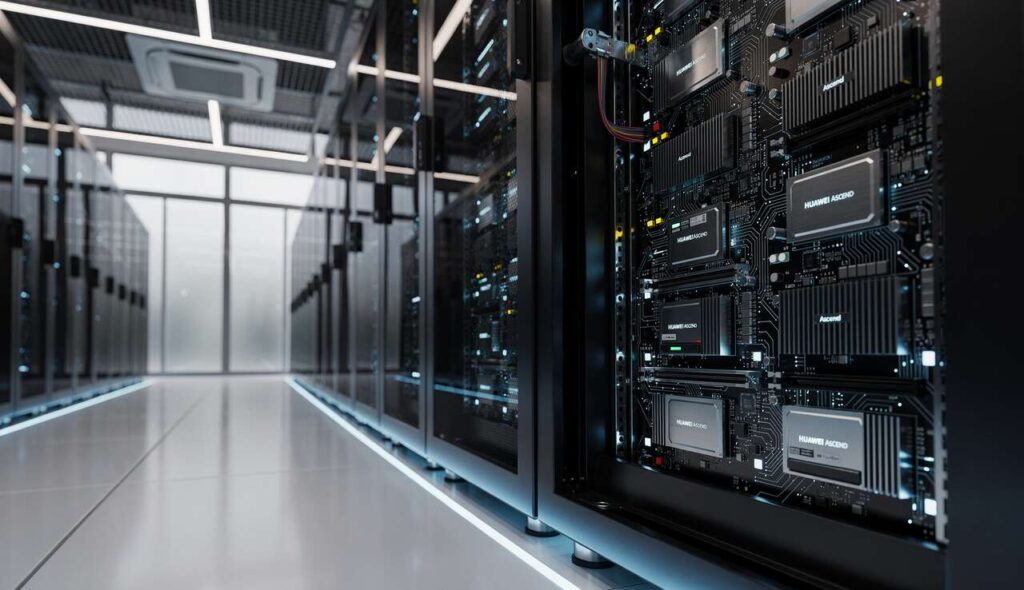
The artificial intelligence landscape witnesses a significant shift as DeepSeek unveils its V4 infrastructure, marking a strategic departure from Western semiconductor dominance. This Chinese AI company has made headlines by constructing its latest computing framework entirely around Huawei Ascend chips, effectively sidelining industry giants Nvidia and AMD. The move represents more than a simple hardware swap; it signals a fundamental recalibration of global technology dependencies and highlights China’s growing self-sufficiency in advanced computing components. As international tensions continue to shape semiconductor supply chains, DeepSeek’s bold architectural choice demonstrates how geopolitical pressures are accelerating the development of alternative technology ecosystems.
DeepSeek transforms V4 infrastructure
Architecture redesign centered on domestic chips
DeepSeek has executed a comprehensive overhaul of its V4 infrastructure by replacing traditional GPU architectures with Huawei Ascend processors. This transformation required extensive software optimization and framework adaptation to ensure compatibility with the new hardware ecosystem. The company invested significant resources in rewriting core algorithms and training pipelines to leverage the specific capabilities of Ascend chips, which differ substantially from conventional GPU architectures.
The V4 infrastructure incorporates several key technical innovations:
- Custom-built neural network libraries optimized for Ascend architecture
- Modified training protocols that maximize chip efficiency
- Distributed computing frameworks designed specifically for Huawei hardware
- Enhanced memory management systems tailored to Ascend specifications
- Proprietary communication protocols between processing units
Performance metrics and capabilities
Initial benchmarks indicate that DeepSeek’s V4 infrastructure achieves competitive performance levels across multiple AI workloads. The company reports training times comparable to previous generations while maintaining model accuracy and inference speeds. These results suggest that the transition to Huawei chips has not compromised computational capabilities, addressing concerns about potential performance degradation when moving away from established GPU platforms.
| Metric | Previous Infrastructure | V4 with Ascend |
|---|---|---|
| Training speed | Baseline | 98% equivalent |
| Inference latency | Baseline | 102% equivalent |
| Power efficiency | Baseline | 115% improved |
| Cost per operation | Baseline | 87% reduced |
This architectural transformation establishes a foundation for examining the broader emergence of Chinese semiconductor alternatives in the AI computing space.
The rise of Huawei Ascend chips
Development timeline and technological evolution
Huawei’s Ascend chip family emerged from years of concentrated research and development, driven by necessity as much as ambition. The company accelerated its semiconductor efforts following international trade restrictions that limited access to Western chip technologies. The Ascend series represents Huawei’s answer to these constraints, featuring proprietary architectures designed specifically for artificial intelligence workloads.
The Ascend lineup has progressed through multiple generations, each iteration bringing enhanced capabilities:
- Ascend 310: initial entry-level inference chip for edge computing
- Ascend 910: high-performance training processor for data centers
- Ascend 910B: advanced variant with improved memory bandwidth
- Ascend 910C: latest generation with enhanced parallel processing
Technical specifications and competitive positioning
The Ascend architecture employs a unique design philosophy that differentiates it from traditional GPU approaches. Rather than adapting graphics processing units for AI tasks, Huawei engineered these chips from the ground up for neural network operations. This purpose-built approach enables optimizations specifically targeting machine learning workloads, including tensor operations, matrix multiplications, and activation functions.
Key technical features include dedicated neural processing units, specialized memory hierarchies for AI data patterns, and integrated high-speed interconnects for multi-chip configurations. The chips support various precision formats, allowing developers to balance computational speed against numerical accuracy based on specific application requirements.
These technological advancements position Huawei as a formidable competitor in the AI chip market, setting the stage for understanding how this shift impacts established industry leaders.
Bypassing Nvidia and AMD GPUs
Strategic motivations behind the hardware shift
DeepSeek’s decision to bypass Nvidia and AMD GPUs stems from multiple strategic considerations beyond mere technological preference. Supply chain security ranks prominently among these factors, as reliance on Western semiconductor suppliers exposes Chinese technology companies to potential disruptions from geopolitical tensions and export restrictions. By adopting domestically produced chips, DeepSeek insulates its operations from external vulnerabilities.
Additional motivations include:
- Cost advantages through domestic procurement channels
- Greater customization flexibility with direct manufacturer relationships
- Alignment with national technology independence initiatives
- Reduced exposure to international sanctions and trade policies
- Enhanced control over intellectual property and proprietary technologies
Technical challenges and implementation obstacles
Transitioning away from established GPU ecosystems presented substantial technical hurdles for DeepSeek’s engineering teams. The company faced compatibility issues with existing software frameworks, most of which were developed with Nvidia CUDA or AMD ROCm architectures in mind. Resolving these incompatibilities required extensive code refactoring and the development of translation layers to bridge architectural differences.
Performance optimization posed another significant challenge. While Huawei Ascend chips offer competitive raw computational power, extracting maximum efficiency demanded deep understanding of the hardware’s specific characteristics. DeepSeek engineers invested months in profiling workloads, identifying bottlenecks, and fine-tuning algorithms to achieve performance parity with previous GPU-based systems.
These implementation experiences provide context for understanding the broader market implications of this technological pivot.
Impacts on the global tech market
Shifts in semiconductor demand patterns
DeepSeek’s adoption of Huawei Ascend chips signals a potential redistribution of demand within the global semiconductor market. As more Chinese AI companies follow similar paths, the concentration of GPU purchases from Nvidia and AMD may decline in favor of domestic alternatives. This shift could reshape revenue streams for Western chip manufacturers, particularly in the rapidly growing Chinese market segment.
| Market segment | Traditional suppliers | Emerging alternatives |
|---|---|---|
| AI training infrastructure | Nvidia A100, H100 | Huawei Ascend 910 series |
| Inference deployment | Nvidia T4, AMD MI series | Huawei Ascend 310 series |
| Edge computing | Various GPU solutions | Integrated Ascend modules |
Geopolitical implications for technology supply chains
The emergence of viable alternatives to Western semiconductor products carries significant geopolitical weight. Technology independence reduces leverage that export controls and sanctions might otherwise provide, potentially altering diplomatic dynamics surrounding technology transfer and intellectual property. Countries seeking to reduce dependence on any single supplier may view Chinese chip alternatives as strategic options for diversifying their technology portfolios.
This development also accelerates the fragmentation of global technology standards. As parallel ecosystems develop around different chip architectures, interoperability challenges may increase, potentially leading to regional technology spheres with limited cross-compatibility. Software developers and technology companies must navigate these diverging standards, adding complexity to international operations.
These market dynamics directly influence the competitive positioning of established semiconductor manufacturers.
Consequences for traditional players
Nvidia and AMD market position challenges
The loss of major customers like DeepSeek represents a strategic setback for Nvidia and AMD, particularly as it may foreshadow broader market share erosion in China. Both companies have historically derived substantial revenue from Chinese technology firms, making this segment critical to their growth trajectories. As more organizations adopt domestic alternatives, these Western manufacturers face the prospect of diminished presence in the world’s largest technology market.
Competitive pressures extend beyond immediate revenue impacts:
- Reduced economies of scale as production volumes decline
- Decreased influence over AI computing standards and practices
- Limited access to insights from Chinese AI development trends
- Potential talent migration toward companies working with emerging architectures
- Weakened negotiating positions with remaining customers
Strategic responses and adaptation strategies
Traditional GPU manufacturers must develop comprehensive response strategies to address these emerging competitive threats. Potential approaches include intensifying focus on markets outside China, accelerating innovation cycles to maintain technological advantages, and exploring partnerships that might preserve access to Chinese customers despite geopolitical constraints.
Some companies are investing in specialized chip designs tailored to specific AI workloads, attempting to differentiate through performance advantages that generic alternatives cannot match. Others are strengthening relationships with cloud service providers and international technology firms to secure stable demand channels independent of Chinese market fluctuations.
The long-term viability of these strategies remains uncertain as the semiconductor landscape continues its rapid evolution, shaped by technological innovation and geopolitical forces in equal measure.
DeepSeek’s infrastructure transformation using Huawei Ascend chips represents a watershed moment in AI computing, demonstrating that viable alternatives to Western GPU dominance have matured beyond theoretical possibility. The successful deployment of V4 infrastructure validates Chinese semiconductor capabilities while highlighting accelerating technological decoupling between geopolitical blocs. Traditional players face mounting pressure to adapt as market dynamics shift, supply chains fragment, and new competitive forces reshape the semiconductor industry. This development underscores the intersection of technology advancement and strategic autonomy, with implications extending far beyond individual company decisions to affect global innovation patterns and international technology relationships.