



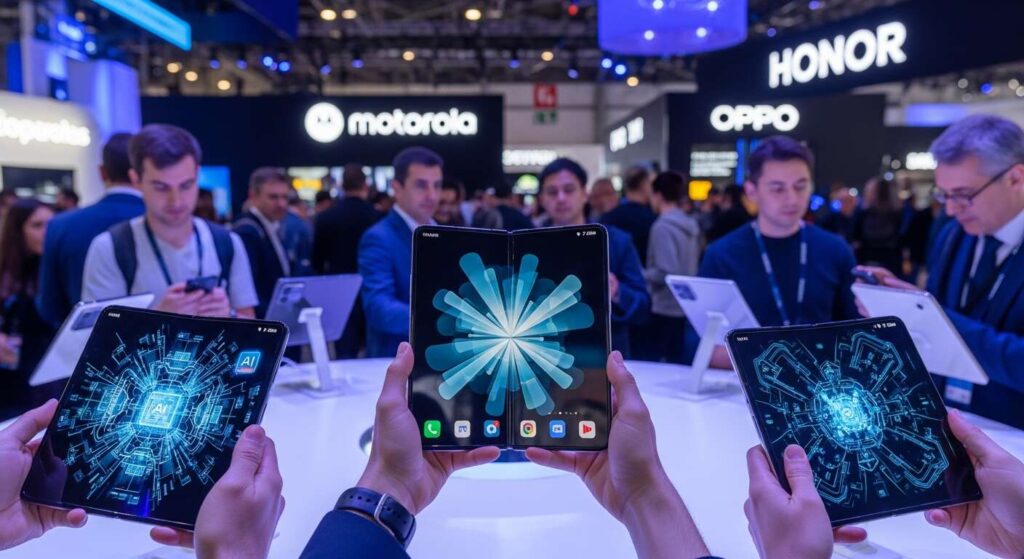
The mobile technology landscape continues to evolve at a remarkable pace, with manufacturers pushing boundaries in both hardware design and software capabilities. Barcelona’s upcoming Mobile World Congress stands as the premier stage where industry leaders unveil their most ambitious innovations. This gathering brings together Samsung, Motorola, OPPO, and Honor, four powerhouses preparing to showcase their latest achievements in foldable devices and artificial intelligence integration. The competition intensifies as each brand seeks to capture consumer attention with groundbreaking features that blend practicality with cutting-edge technology.
Introduction to MWC 2026: stakes and Trends
The significance of mobile world congress
Mobile World Congress has established itself as the definitive platform for technological revelations in the telecommunications sector. Manufacturers strategically time their most significant product launches to coincide with this event, ensuring maximum visibility among industry professionals, media representatives, and potential customers worldwide. The convention floor transforms into a competitive arena where brands demonstrate their technological prowess and vision for the future of mobile computing.
Key trends shaping the event
Several dominant themes emerge as manufacturers prepare their presentations:
- Foldable technology refinement with improved durability and functionality
- Artificial intelligence integration across device ecosystems
- Enhanced camera systems powered by computational photography
- Battery efficiency improvements through advanced power management
- Sustainability initiatives in manufacturing and materials
The convergence of foldable form factors and AI capabilities represents the most compelling narrative, as manufacturers recognize that hardware innovation alone no longer suffices to differentiate their offerings. These technological advancements promise to redefine user expectations and establish new benchmarks for mobile device performance.
Samsung: new Challenges in the Foldable Market
Defending market leadership
Samsung pioneered the mainstream foldable market and maintains a commanding position, yet faces intensifying competition from emerging challengers. The South Korean giant must demonstrate continued innovation to justify its premium positioning while addressing persistent concerns about durability and practicality. Industry observers anticipate refinements to the Galaxy Z series that address user feedback accumulated over multiple generations of foldable devices.
Expected innovations and improvements
| Feature | Current Generation | Expected Improvement |
|---|---|---|
| Screen crease visibility | Noticeable in certain lighting | Reduced by 40% |
| Fold durability | 200,000 folds rated | 300,000+ folds rated |
| Device thickness | 15.8mm folded | Under 13mm folded |
Samsung’s approach likely emphasizes ecosystem integration, leveraging its Galaxy AI platform to deliver features that extend beyond individual devices. The company’s substantial research and development budget enables parallel advancement across multiple technological fronts, from display technology to semiconductor design. This comprehensive strategy aims to maintain Samsung’s reputation as the benchmark against which competitors measure themselves.
The pressure to innovate extends beyond hardware specifications, as Samsung must also demonstrate compelling use cases that justify the premium pricing of foldable devices.
Motorola: innovation at the Service of Foldables
The razr legacy reimagined
Motorola approaches foldable technology with a distinctive philosophy rooted in its iconic Razr heritage. The brand focuses on compact flip-style designs that prioritize portability and nostalgia while incorporating modern capabilities. This strategy differentiates Motorola from competitors pursuing larger, tablet-like folding formats, allowing the company to target consumers seeking pocket-friendly alternatives to traditional smartphones.
Practical innovations and accessibility
Motorola’s competitive advantage lies in delivering foldable technology at more accessible price points without sacrificing essential features. The company’s engineering teams concentrate on practical improvements that enhance daily usability:
- External display functionality that reduces the need to unfold the device
- Hinge mechanisms designed for one-handed operation
- Software optimization for seamless transitions between folded and unfolded states
- Camera systems that leverage the foldable form factor for unique shooting angles
The brand’s emphasis on user experience refinement rather than specification supremacy resonates with consumers who value practical functionality over benchmark performance. Motorola’s presentation at the congress will likely showcase how thoughtful design choices can deliver compelling foldable experiences without requiring cutting-edge components in every category.
As manufacturers explore different approaches to foldable technology, attention shifts to how artificial intelligence enhances these innovative form factors.
OPPO Might Dive into AI for its Foldables
AI integration strategy
OPPO has signaled intentions to position artificial intelligence as a core differentiator for its foldable lineup. The Chinese manufacturer recognizes that superior hardware alone cannot guarantee market success in an increasingly crowded segment. By developing proprietary AI features tailored specifically for foldable devices, OPPO aims to create unique value propositions that justify premium pricing and attract technology enthusiasts.
Potential AI-powered features
Speculation surrounds the specific capabilities OPPO might unveil, with industry analysts predicting several innovative applications:
- Intelligent screen management that automatically optimizes content layout based on folding angle
- AI-enhanced multitasking that predicts app combinations and suggests split-screen configurations
- Advanced photography features using machine learning to optimize images across multiple lenses
- Voice assistant integration designed specifically for foldable form factors
- Battery management algorithms that learn usage patterns and extend device longevity
The company’s ColorOS interface provides a foundation for AI integration across system functions, enabling cohesive experiences that extend beyond isolated features. OPPO’s research teams have invested substantially in machine learning capabilities, suggesting that the foldable announcements will showcase practical applications rather than theoretical possibilities.
Honor’s approach to combining aesthetic design with intelligent features presents yet another perspective on the future of foldable devices.
Honor: combining Design and Artificial Intelligence
Design philosophy and market positioning
Honor distinguishes itself through an emphasis on aesthetic refinement alongside technological capability. The brand targets consumers who refuse to compromise on style when adopting innovative form factors. This design-forward approach manifests in attention to materials, color options, and overall device proportions that prioritize visual appeal without sacrificing functionality.
AI features tailored for user experience
Honor’s artificial intelligence strategy focuses on enhancing daily interactions rather than showcasing technical specifications. The company’s MagicOS platform incorporates machine learning across multiple touchpoints:
| AI Feature | User Benefit | Implementation |
|---|---|---|
| Smart Display Adaptation | Optimal viewing in any position | Real-time content adjustment |
| Predictive App Loading | Faster access to frequent apps | Usage pattern analysis |
| Intelligent Power Distribution | Extended battery life | Component-level optimization |
The integration of AI extends to Honor’s camera systems, where computational photography compensates for physical limitations inherent in slim foldable designs. This approach enables impressive photographic results without requiring bulky camera modules that compromise device aesthetics. Honor’s presentation will likely emphasize how artificial intelligence enables beautiful hardware to deliver exceptional performance.
These manufacturer-specific strategies collectively influence broader industry dynamics and consumer expectations.
Impact of Announcements on the Tech Industry
Market competition and consumer choice
The simultaneous announcements from multiple manufacturers create a competitive environment that benefits consumers through accelerated innovation and improved value propositions. As Samsung, Motorola, OPPO, and Honor present their visions for foldable technology, the market expands beyond early adopters to encompass mainstream consumers considering their first foldable device. This expansion drives price normalization and encourages manufacturers to differentiate through software experiences and ecosystem integration rather than hardware specifications alone.
Industry-wide implications
The congress announcements signal several important trends for the broader technology sector:
- Foldable devices transitioning from niche products to mainstream options
- AI becoming a standard expectation rather than a premium feature
- Increased focus on practical durability over theoretical specifications
- Ecosystem integration as a key competitive differentiator
- Sustainability considerations influencing design and manufacturing decisions
Component suppliers, software developers, and accessory manufacturers all respond to these shifts, creating a comprehensive ecosystem that supports foldable device adoption. The announcements at Mobile World Congress establish benchmarks that influence product development cycles throughout the industry, affecting not only direct competitors but also adjacent technology categories.
The collective innovations presented in Barcelona demonstrate how foldable technology and artificial intelligence converge to redefine mobile computing. These announcements from Samsung, Motorola, OPPO, and Honor represent more than individual product launches; they signal an industry-wide commitment to transforming how consumers interact with mobile devices. The emphasis on practical AI applications, improved durability, and thoughtful design refinements suggests that foldable technology has matured beyond experimental status to become a viable mainstream option. As these manufacturers compete for market position, consumers benefit from accelerated innovation, improved value propositions, and expanding choices that accommodate diverse preferences and budgets.