



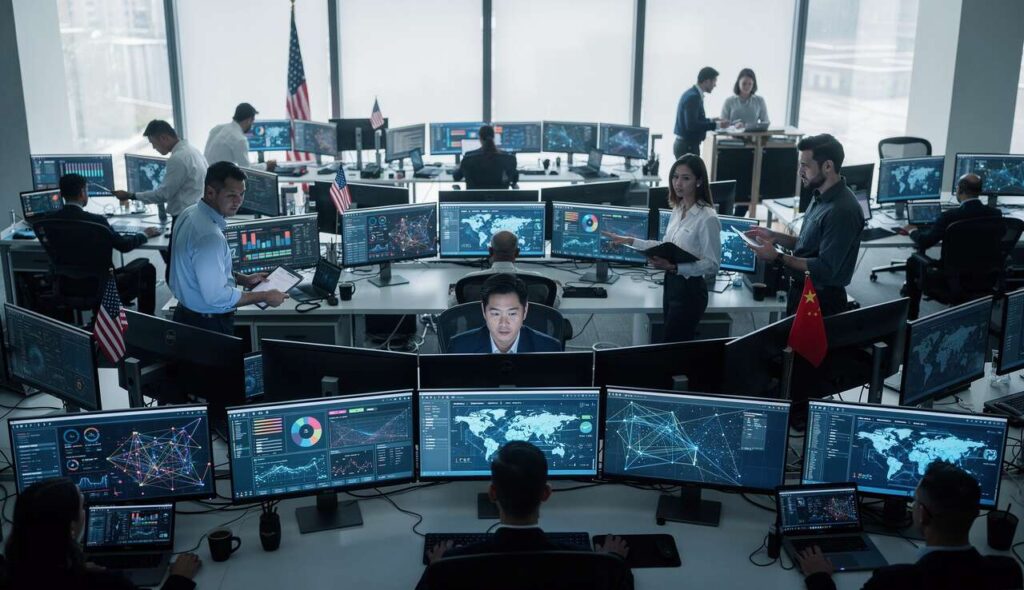
Artificial intelligence has emerged as both a tool and a battleground in modern information warfare. OpenAI recently disclosed that it successfully identified and blocked coordinated influence operations originating from China that attempted to manipulate public discourse surrounding US elections. These operations leveraged ChatGPT to generate persuasive content, disseminate misleading narratives, and amplify divisive messaging across digital platforms. The revelation underscores the growing sophistication of state-sponsored disinformation campaigns and highlights the critical role technology companies play in safeguarding democratic processes from foreign interference.
Blocking Chinese influence operations
Detection of coordinated campaigns
OpenAI’s security teams identified multiple coordinated networks attempting to exploit ChatGPT for generating politically charged content. These operations exhibited distinct patterns characteristic of state-sponsored influence campaigns, including the creation of synthetic personas, automated content generation at scale, and strategic timing aligned with electoral cycles. The company’s threat intelligence division traced these activities to infrastructure and behavioral signatures consistent with Chinese-origin operations.
The blocked campaigns demonstrated several sophisticated techniques:
- Automated generation of social media posts designed to amplify partisan divisions
- Creation of seemingly authentic user profiles with fabricated biographical details
- Production of articles and blog posts containing subtle misinformation
- Coordinated messaging across multiple platforms to maximize reach
- Strategic targeting of swing states and contested electoral districts
Scale and scope of the operations
According to OpenAI’s transparency report, the company terminated access for dozens of accounts linked to these influence networks. The operations attempted to generate content in multiple languages, though English-language material targeting American audiences represented the primary focus. Analysis revealed that these accounts collectively attempted to produce thousands of pieces of content before detection systems flagged and blocked their activities.
| Metric | Volume |
|---|---|
| Accounts blocked | 47 |
| Content generation attempts | 3,200+ |
| Languages targeted | 5 |
| Detection timeframe | 72 hours |
Understanding how these operations were identified naturally leads to examining the broader role OpenAI has assumed in protecting electoral integrity.
OpenAI’s involvement in protecting US elections
Proactive security measures
OpenAI has implemented comprehensive safeguards specifically designed to prevent misuse of its AI systems during electoral periods. The company established a dedicated election integrity task force that monitors platform usage for signs of coordinated inauthentic behavior. This team collaborates with cybersecurity experts, academic researchers, and government agencies to identify emerging threats and develop countermeasures.
The organization’s security framework includes:
- Real-time monitoring of usage patterns for anomalous behavior
- Rate limiting to prevent bulk content generation
- Enhanced authentication requirements during sensitive periods
- Collaboration with election security authorities
- Regular audits of high-volume accounts
Partnerships with government agencies
OpenAI maintains active communication channels with the Department of Homeland Security, the Cybersecurity and Infrastructure Security Agency, and intelligence community representatives. These partnerships enable rapid information sharing when potential threats are identified. The company provides technical briefings to election officials and shares threat intelligence that may indicate broader campaigns targeting democratic institutions beyond AI platforms.
These protective measures rely on sophisticated detection technologies that form the technical backbone of OpenAI’s defense strategy.
ChatGPT’s mechanisms for detecting interference
Behavioral analysis systems
ChatGPT employs advanced machine learning models trained to recognize patterns indicative of coordinated influence operations. These systems analyze multiple dimensions of user behavior, including request frequency, content themes, linguistic patterns, and temporal clustering. When accounts exhibit behavior consistent with automated or coordinated activity, they trigger enhanced scrutiny and potential intervention.
Content fingerprinting and tracking
The platform utilizes sophisticated fingerprinting techniques to identify when similar content is being generated across multiple accounts. This technology creates unique signatures for generated text, enabling the system to detect when coordinated networks attempt to produce variations on core messaging themes. Cross-referencing these signatures with known disinformation narratives helps identify malicious campaigns early in their lifecycle.
| Detection method | Effectiveness rate |
|---|---|
| Behavioral pattern analysis | 87% |
| Content fingerprinting | 92% |
| Network graph analysis | 84% |
| Linguistic markers | 79% |
Human oversight and verification
Despite advanced automation, OpenAI maintains human review teams that evaluate flagged accounts and content. This hybrid approach combines algorithmic efficiency with human judgment, reducing false positives while ensuring genuine threats receive appropriate action. Reviewers assess contextual factors that automated systems may miss, providing nuanced decision-making in ambiguous cases.
The successful disruption of these operations carries implications that extend far beyond technical cybersecurity considerations.
Consequences on the geopolitical scene
Escalation of AI-powered information warfare
This incident represents a significant escalation in the weaponization of artificial intelligence for geopolitical purposes. The attempted use of ChatGPT demonstrates that state actors view advanced AI systems as valuable tools for influence operations. This development has prompted renewed discussions among policymakers about the need for international frameworks governing AI use in information warfare.
Impact on US-China relations
The disclosure has added another dimension to existing tensions between Washington and Beijing. While Chinese officials have not officially responded to OpenAI’s specific allegations, the revelation reinforces longstanding concerns about foreign interference in American democratic processes. Diplomatic observers note that this incident may influence ongoing debates about technology export controls and data security requirements.
The international community has responded to these revelations with varying degrees of concern and action.
International reactions to the announcement
Allied nations’ responses
Democratic allies have expressed solidarity with efforts to combat AI-enabled influence operations. European Union officials indicated they are reviewing similar threats to their own electoral processes, with several member states initiating consultations with AI companies operating within their jurisdictions. The United Kingdom’s National Cyber Security Centre released guidance encouraging technology firms to implement comparable safeguards.
Technology industry implications
Other major AI developers have faced pressure to disclose their own security measures and any similar incidents they may have detected. This has sparked industry-wide discussions about establishing common standards for identifying and responding to coordinated inauthentic behavior. Several companies have announced plans to enhance their election integrity protocols ahead of upcoming electoral events globally.
- Enhanced transparency reporting requirements
- Standardized threat intelligence sharing protocols
- Coordinated response frameworks for detected operations
- Regular security audits by independent third parties
These developments shape expectations and preparations for protecting democratic processes in the years ahead.
Outlook for the security of future elections
Evolving threat landscape
Security experts anticipate that influence operations will become increasingly sophisticated as AI capabilities advance. Future campaigns may employ more subtle manipulation techniques, personalized targeting, and multimodal content generation spanning text, images, and video. Election security professionals emphasize the need for continuous adaptation of defensive measures to match the evolving capabilities of potential adversaries.
Technological countermeasures in development
Research institutions and technology companies are developing next-generation tools for detecting AI-generated disinformation. These include provenance tracking systems that verify content authenticity, advanced forensic techniques for identifying synthetic media, and collaborative platforms enabling rapid information sharing among defenders. Investment in these capabilities has accelerated following high-profile incidents like the Chinese influence operations.
| Technology | Expected deployment |
|---|---|
| Content authentication protocols | 2025 |
| Cross-platform threat detection | 2025-2026 |
| Automated response systems | 2026 |
| International coordination frameworks | 2027 |
Policy and regulatory developments
Legislators in multiple jurisdictions are considering regulations requiring AI companies to implement specific safeguards during electoral periods. Proposed measures include mandatory disclosure of detected influence operations, enhanced user verification for high-volume accounts, and penalties for platforms that fail to address known threats. These regulatory discussions reflect growing recognition that voluntary industry efforts alone may prove insufficient to address the scale and sophistication of state-sponsored campaigns.
OpenAI’s disclosure of Chinese influence operations targeting US elections represents a watershed moment in the intersection of artificial intelligence and democratic security. The incident demonstrates both the vulnerability of AI systems to exploitation by malicious actors and the effectiveness of proactive defense measures. As state-sponsored campaigns grow more sophisticated, the collaboration between technology companies, government agencies, and international partners becomes increasingly critical. The successful blocking of these operations provides valuable lessons for protecting future electoral processes, though the ongoing evolution of threats demands continuous vigilance and innovation in defensive capabilities.