
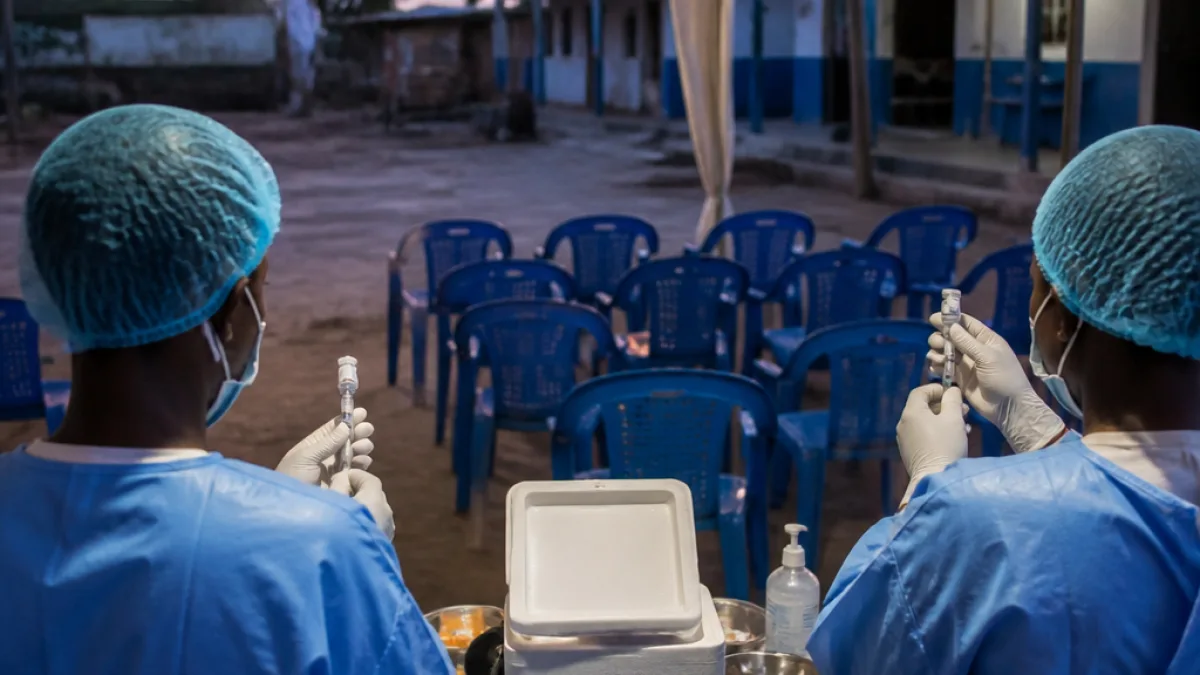
The World Health Organization said Friday that the first participant has been vaccinated in a clinical trial aiming to determine whether existing and candidate vaccines can protect against the Bundibugyo species of Ebola that is driving the Democratic Republic of Congo’s largest recorded outbreak.
Trial aims and context
The study, known as Tumaini, began Oct. 23 in Bunia, the capital of Ituri province, the epicenter of the outbreak. The epidemic has surpassed 9,700 reported cases and more than 4,600 deaths, WHO officials said. The outbreak, declared by the DRC in May, has spread across several countries and prompted international concern.
The Tumaini trial combines several vaccine candidates in a single protocol to assess safety, immunogenicity and efficacy. It will use a ring vaccination approach, immunizing people identified as close contacts of confirmed cases and others judged at high risk.
“Science gives us hope. Today, in Bunia DRC, the first participants were vaccinated in a new Ebola vaccine trial called Tumaini, which means 'hope' in Swahili,” WHO Director-General Tedros Adhanom Ghebreyesus said on X.
Vaccines under study
The trial will initially test Ervebo, a vaccine licensed for protection against the Zaire strain of Ebola, to see if it offers any cross-protection against the Bundibugyo virus. Investigators plan to incorporate two Bundibugyo-specific candidates as they complete earlier-stage testing.
- Ervebo: an approved vaccine for Zaire Ebola, being tested for possible cross-protection against Bundibugyo.
- ChAdOx1-based candidate: an adenoviral vector vaccine developed by the University of Oxford.
- An mRNA candidate from Moderna: uses mRNA technology and is advancing through early clinical studies.
Both Bundibugyo-specific candidates have received funding from the Coalition for Epidemic Preparedness Innovations, CEPI said. The Tumaini framework is designed to add or remove vaccine arms as data accrues and new candidates become available.
Operational approach and partnerships
The trial is being led by Congolese health authorities with WHO support and will work closely with affected communities, local health officials and outbreak response partners, WHO said. Ring vaccination — used in previous Ebola responses — targets contacts and contacts of contacts around confirmed cases to try to interrupt transmission chains.
WHO officials said the study will provide data on whether vaccines developed for other Ebola species can cross-protect against Bundibugyo and on the safety and immune responses elicited by the Bundibugyo-specific candidates.
WHO’s announcement and the launch of Tumaini come amid continued transmission and high mortality in the DRC, underscoring the urgent need for tools specifically tailored to this virus species.
No therapeutic or vaccine had been approved specifically for the Bundibugyo virus at the start of the trial, a factor cited by WHO in prioritizing the trial.