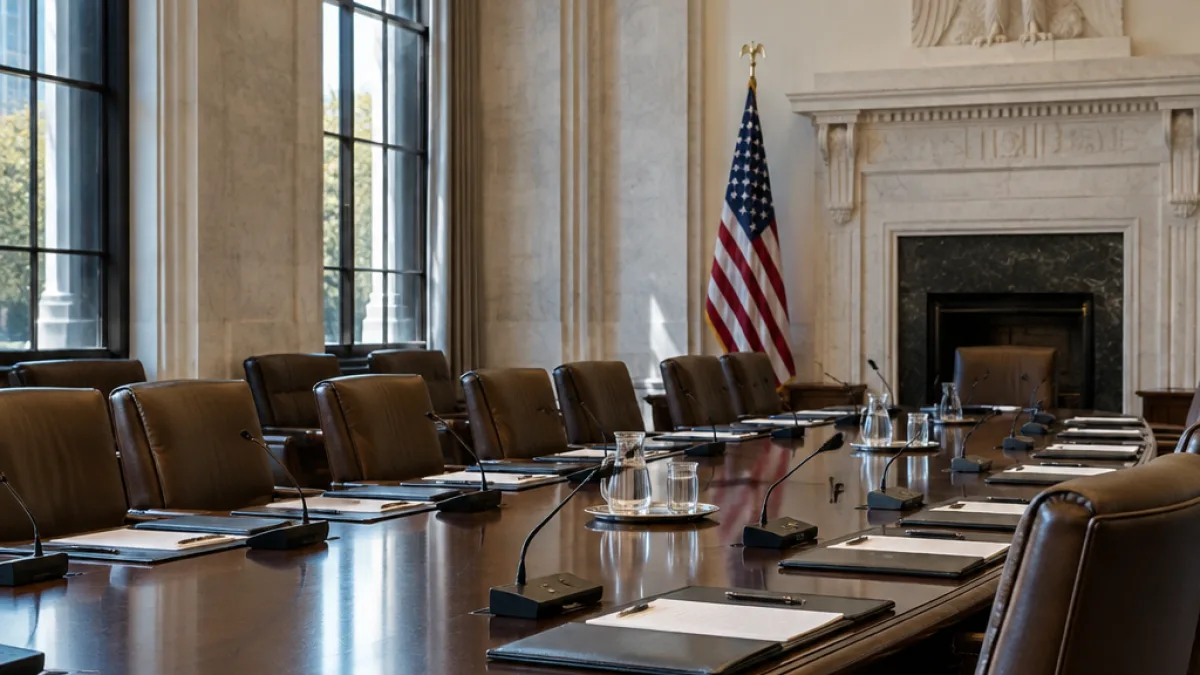
Federal Reserve Chair Kevin Warsh said the central bank will retain its eight annual meetings but convert one meeting in 2027 and two meetings in 2028 into strategy sessions without scheduled votes on interest rates.
The change, announced at Warsh’s news conference on Oct. 28, will give the Federal Open Market Committee fewer meetings dedicated to setting the federal funds rate. The strategy sessions will focus on broader monetary-policy questions rather than producing a rate decision, and the Fed has not finalized what materials or communications will follow those meetings.
“In 2027, one meeting will focus exclusively on broad monetary policy strategy, with neither a vote on the federal funds rate nor a policy statement anticipated.”
Warsh said the Fed still needs regular meetings to assess developments in the economy and decide whether policy should change. He also said the committee needs dedicated time for longer-term discussions among officials with differing views about monetary policy.
Fewer scheduled opportunities for a rate decision
The adjustment means the Fed is expected to have seven policy-setting meetings in 2027 and six in 2028, based on the schedule described by Warsh. The central bank can still change interest rates between regularly scheduled meetings, although such action is uncommon. The Fed last made an unscheduled policy change in early 2020, according to Reuters.
- 2027: one of eight meetings will be devoted to strategy rather than a rate vote.
- 2028: two meetings will be used for strategy discussions, leaving six policy-setting sessions.
- Policy rate: The federal funds target range remained at 3.75% to 4% after the committee’s Oct. 28 decision.
The Federal Open Market Committee voted 10-2 to maintain that target range at the Oct. 28 meeting. The decision followed a quarter-point increase in September, which was the first rate increase since July 2023 and passed on a 12-0 vote.
Omair Sharif, president of Inflation Insights, told clients he expects the October 2027 meeting to be the first session without rate-setting discussions. That meeting falls between two gatherings that produce quarterly economic projections, Sharif said, leaving about 12 weeks between opportunities to change the policy rate.
Changes to the Fed’s communication
Warsh has also altered the central bank’s approach to communicating its outlook. He said he does not favor forward guidance in ordinary economic conditions and does not submit an individual rate projection to the committee’s dot plot, a collection of officials’ forecasts for the federal funds rate.
Warsh said the Fed has not yet determined what it will release after a strategy meeting. He said details about the format and public communication are expected in fall 2027. The central bank’s next schedules will therefore distinguish between meetings intended to set policy and those reserved for reviewing its broader strategy.