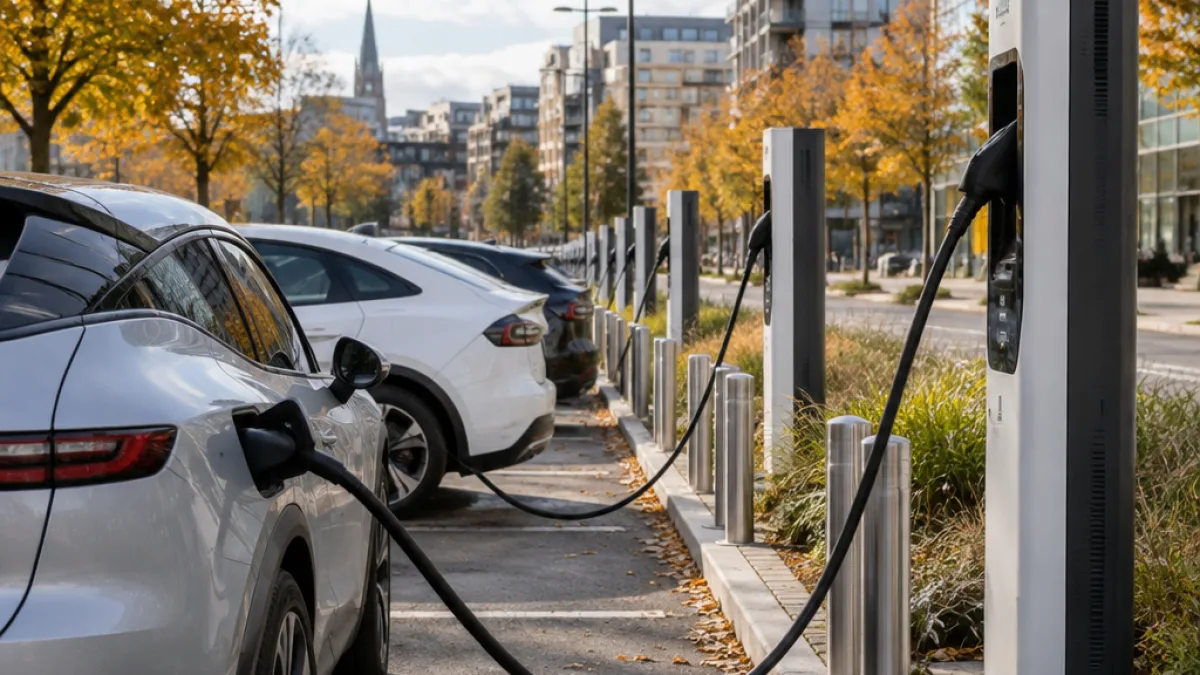
Tesla registrations rose sharply across several Northern European markets in October, extending a regional recovery for the U.S. electric-vehicle maker even as Chinese manufacturers captured more of the market.
Registrations increased 248% in Sweden, 131% in Norway and 34% in Denmark, according to data from Mobility Sweden, Norway’s OFV and Denmark’s bilstatistik.dk. The comparisons benefited from lower figures a year earlier, while higher fuel prices, government incentives and continued demand for electric vehicles also supported the market.
The results were uneven across the three countries. Tesla recorded its best October on record in Norway and ranked as the country’s top-selling car brand, with a 9.8% share of the market, OFV data showed.
“Especially in Norway people are generally more affluent than elsewhere in Europe, people are less seeking the lower offerings of Chinese brands than in other European countries,” Rico Luman, a senior economist at ING Research, said.
Chinese automakers nonetheless made their strongest showing yet in Norway. The brands accounted for 22.5% of new passenger-car registrations there in October, their highest monthly share on record.
- Sweden: Tesla registrations rose 248%.
- Norway: Tesla registered 1,548 vehicles and reached a 9.8% market share.
- Denmark: Registrations rose 34%, but Tesla’s market share was 0.73%.
Denmark provided the clearest example of the pressure from newer competitors. Tesla’s 0.73% share trailed BYD, Leapmotor, Xpeng and SAIC-owned MG, which each held between 1.6% and 5.5% of the market.
“Northern Europe is quite open to the new players as long as they are efficient EVs,” Felipe Munoz, an industry analyst who runs the Car Industry Analysis platform, said. “That’s what allowed Tesla to get to a leading position and it’s what is allowing the Chinese to gain ground fast.”
The October figures show Tesla gaining ground in some of the region’s markets while facing a broader field of competitors. The company’s performance was strongest in Norway and Sweden, while its weaker position in Denmark reflected the growing fragmentation of Europe’s electric-vehicle market.