
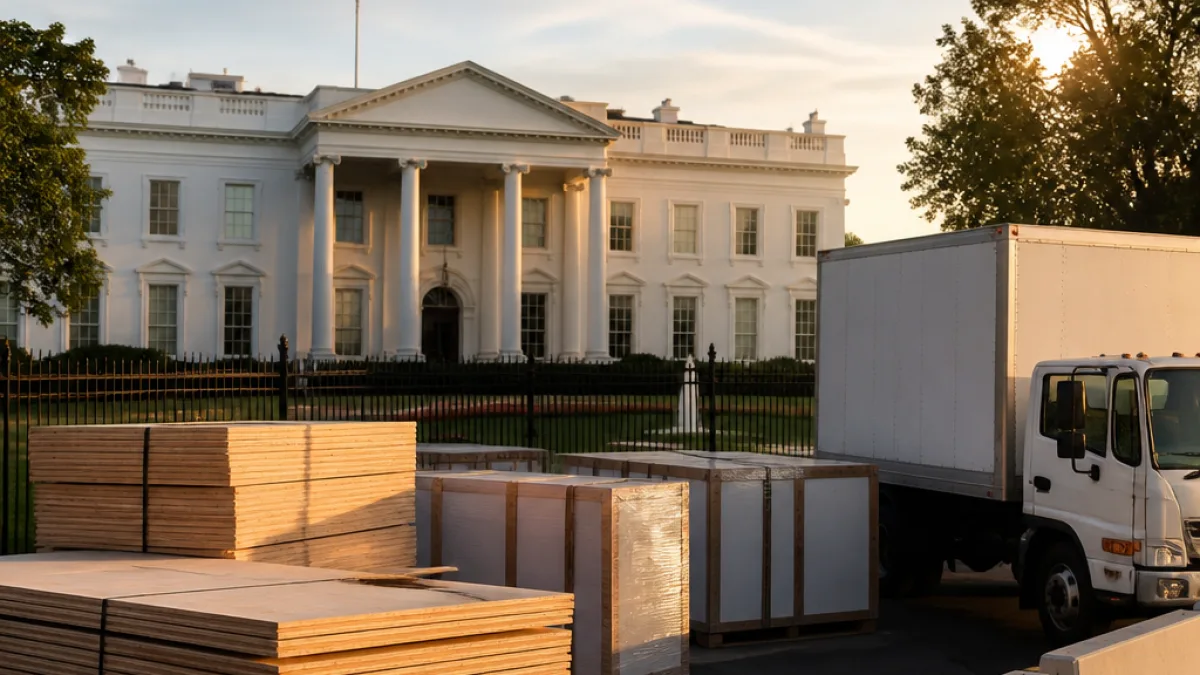
The White House said Friday it will lift certain tariffs on Canadian products and simultaneously impose new levies on others, a calculated adjustment to a tariff regime that has strained ties with the United States’ largest trading partner.
The changes take effect Oct. 30, the White House said, and will remove duties on items that include “plywood sheets, some paper products, certain machinery and refrigeration equipment.” At the same time, the administration announced new levies on select goods such as carpets, certain valves and waste products.
Policy shift and rationale
The White House described the move as an effort to offset “the burden to U.S. commerce while better serving the public interest.” Officials said the adjustments were intended to relieve costs for American businesses and households that depend on specific Canadian supplies.
“Canada is working very hard to make a deal with us.” — President Donald Trump
President Donald Trump told reporters the changes reflected an improving negotiating position with Canada.
Political and regional reactions
The easing comes less than two weeks before the Nov. 3 midterm elections, where members of the president’s party are contesting several close races. Republican Sen. Susan Collins of Maine, who has been engaged with administration trade officials, said she had pressed the White House about the impact of tariffs on Maine families, farms and businesses.
“Many of our farmers and growers rely on specialized equipment, packaging materials, and other products from Canada that are either unavailable from American suppliers or cannot be replaced without incurring significant expense,” said Collins, who said she had discussed the issue with Jamieson Greer, the president’s top trade negotiator, and Commerce Secretary Howard Lutnick.
Collins said she asked for relief and pledged to press for a broader trade agreement with Canada, calling the two nations neighbor, ally and largest trading partner.
Background of the dispute
- Trade tensions between Washington and Ottawa escalated earlier this year after negotiations broke down in August, when the administration announced a 50% levy on some Canadian goods, according to the White House timeline.
- Canada retaliated with its own tariffs, the White House said, and both sides have engaged in high-level talks since then.
- The administration framed Friday’s adjustments as a mix of targeted relief and continued pressure to win a broader deal with Canada.
The White House said the tariff changes were crafted to reduce immediate costs to U.S. firms that rely on Canadian inputs while preserving leverage on broader trade talks. Officials did not announce a comprehensive agreement or a timetable for further negotiations.
U.S.-Canada trade policy has become a campaign issue in several close races, and Republican officials have cited relief for affected industries and voters in states with tight contests. The White House said its actions were meant to balance trade objectives with near-term economic impacts on U.S. businesses.
The tariff adjustments will be implemented administratively, with the specific list of products and the new duty rates to take effect on Oct. 30, the White House said.