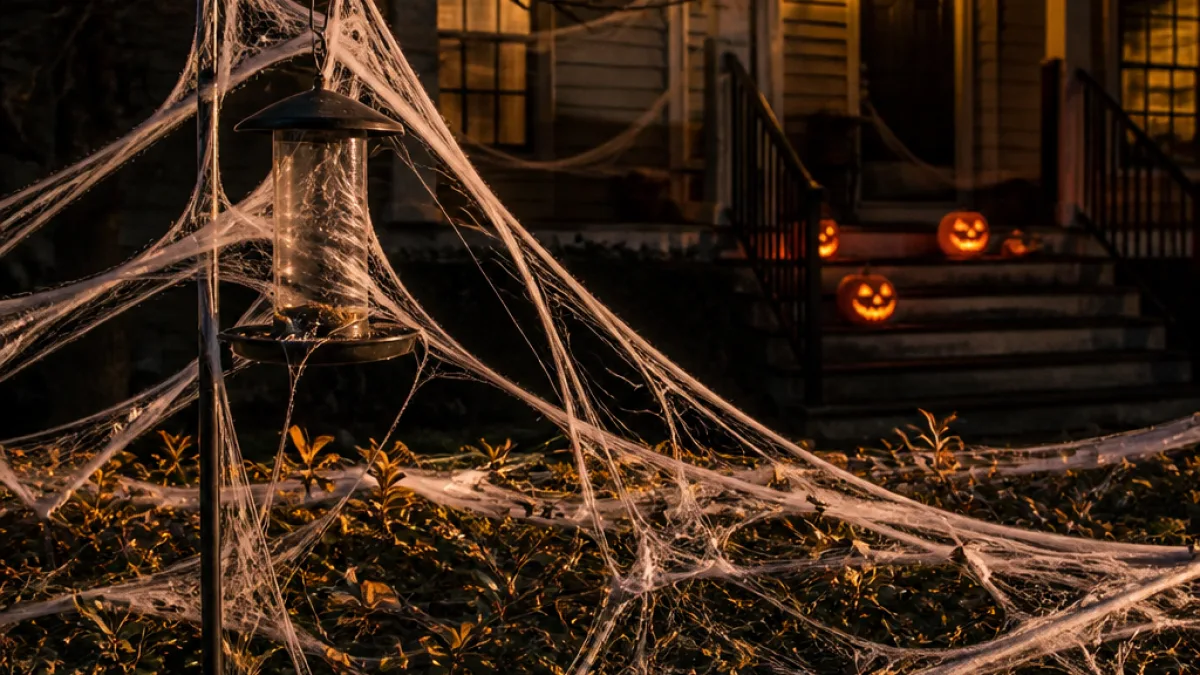
As Halloween decorations go up, wildlife experts are urging householders to avoid using synthetic spider-web decor outdoors because the material can entangle and harm birds, bats, hedgehogs and insects.
Why synthetic cobwebs are dangerous
Lucy Taylor, a wildlife expert at Vine House Farm, warned that plastic-style webbing sold for Halloween can be tougher and more hazardous to animals than real spider silk. “Wildlife can easily become caught in fake spider web decorations commonly used around Halloween, especially the artificial cobwebs,” she said. Taylor contrasted the artificial material with natural spider silk, which she said breaks apart more readily under weight.
“The stretchy, cotton-style webbing sold for Halloween is made of fine synthetic fibres that are very hard for an animal to break or bite through,” Mosh Latifi, co-owner of EcoCare Pest Management, said.
Latifi added that when an animal becomes trapped, struggling often tightens the strands, increasing the risk of severe injury. He also noted that the decorations cling to whatever touches them, amplifying the danger to wildlife that fly through or explore yards at night.
Ingestion and nesting risks
- Experts said non-biodegradable plastics or fine mesh can be picked up by small mammals and pose choking or internal blockage hazards.
- Many birds collect real spider silk when building nests and may not distinguish between natural silk and synthetic fibres, potentially incorporating hazardous material into nests.
Taylor and Latifi both urged people to consider alternatives that reduce risk to wildlife while still offering spooky visuals for trick-or-treaters and families.
Safer decorating options
- Use decorations that do not include loose fibrous material outdoors, such as carved pumpkins, battery-powered lanterns or fabric banners secured away from flight paths.
- Keep yard lighting visible and safe to minimize unintended encounters between wildlife and decor.
- Bring any delicate or fibrous decorations inside overnight or when not supervised.
As Halloween approaches, experts say small changes in decorating choices can prevent accidental harm to local wildlife that visit neighborhoods after dark.