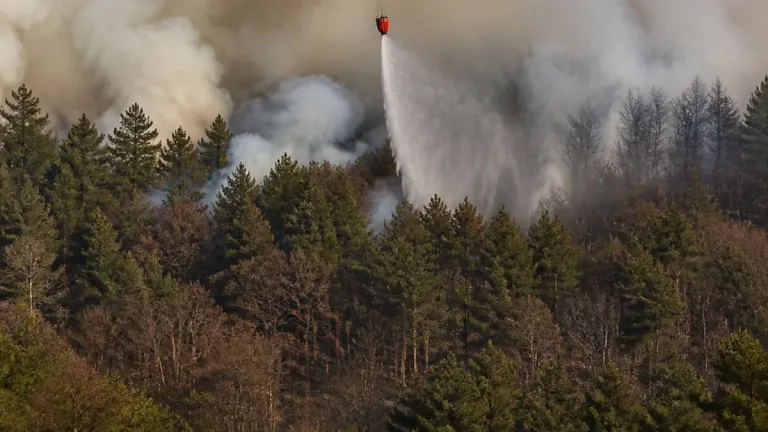
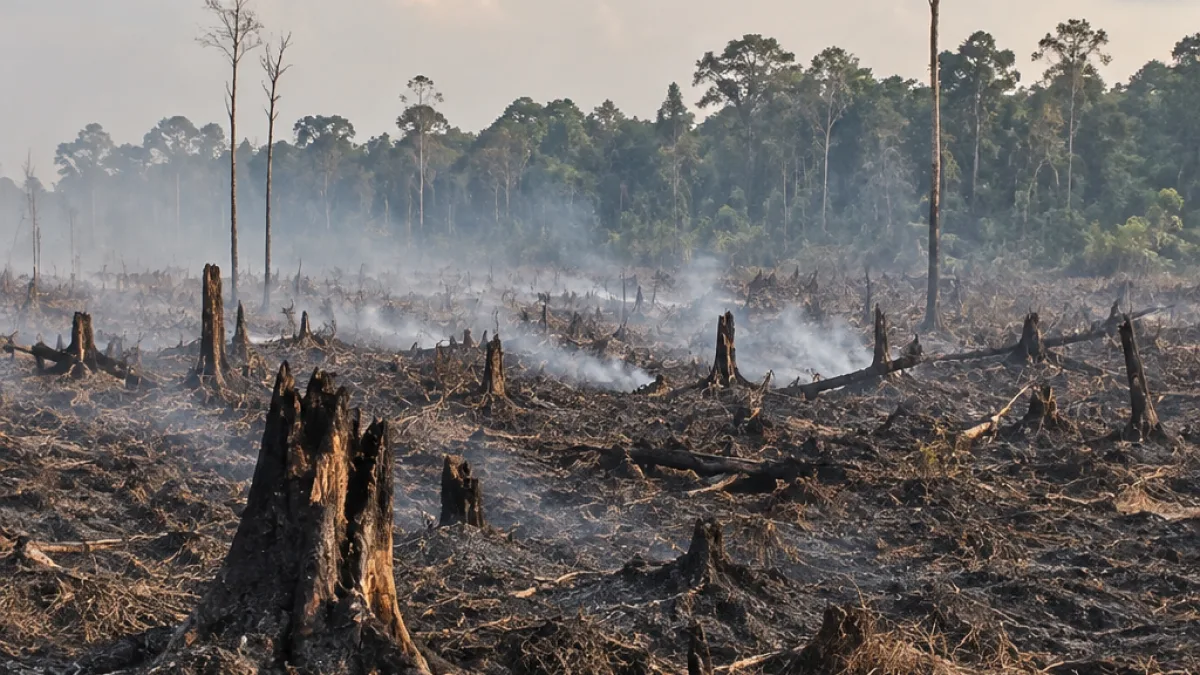
Wildfires have burned about 1.9 million hectares across Indonesia during 2026, damaging savannas, forests and peatlands from Papua to Sumatra and Borneo. An analysis of the fires estimates that some of the affected land could require decades or even centuries to regain its former condition.
The assessment found that recovery depends on the depth and extent of the burning, as well as the type of vegetation and soil affected. Restoration would also require the land to stop smoldering and sustained efforts to repair the damaged ecosystems. Under those conditions, some areas could take as long as 350 years to recover.
Peatlands drove most of the emissions
Data from the independent monitoring platform Nusantara Atlas put Indonesia’s burned area at roughly 1.9 million hectares as of late September. That is about 12 times the size of London and 38% larger than the area burned during Indonesia’s 2019 wildfire season, another year marked by an El Niño episode.
Peatlands made up about 400,000 hectares, or roughly 20% of the total area burned. Although they represented a smaller share of the burned land, the analysis estimated that peat fires produced about 80% of the carbon emissions. Peat soil stores large amounts of carbon, so fires that burn into it can release substantially more emissions than fires limited to surface vegetation.
- Estimated carbon released by late September: 100 million tonnes
- Estimated equivalent carbon dioxide emissions: about 370 million tonnes
- Estimated equivalent annual emissions: about 97 coal-fired power plants
The analysis estimated that the fires had released about 100 million tonnes of carbon by late September, equivalent to approximately 370 million tonnes of carbon dioxide. That amount was compared with the annual emissions of 97 coal-fired power plants.
The estimate could be conservative because satellite systems may miss small fires or flames obscured by heavy haze. The Copernicus Atmosphere Monitoring Service separately projected that Indonesia’s wildfire-related carbon emissions could reach 200 million tonnes by October.
Recovery depends on restoration
The assessment links the length of recovery to both the severity of the fire and the landscape’s ability to regenerate. Areas where vegetation burns without deeply damaging the soil may recover more quickly, while peatlands and other sites with extensive soil loss can require much longer restoration. The analysis said burned land would take decades to centuries to fully recover, and that the longest timelines depend on serious restoration work after the fires have stopped smoldering.