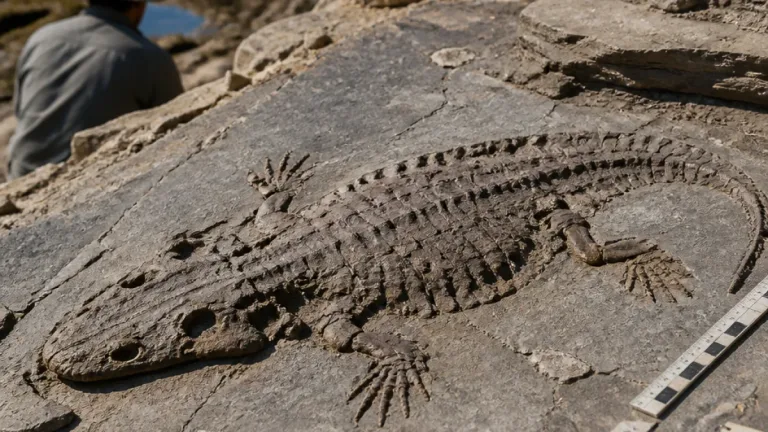
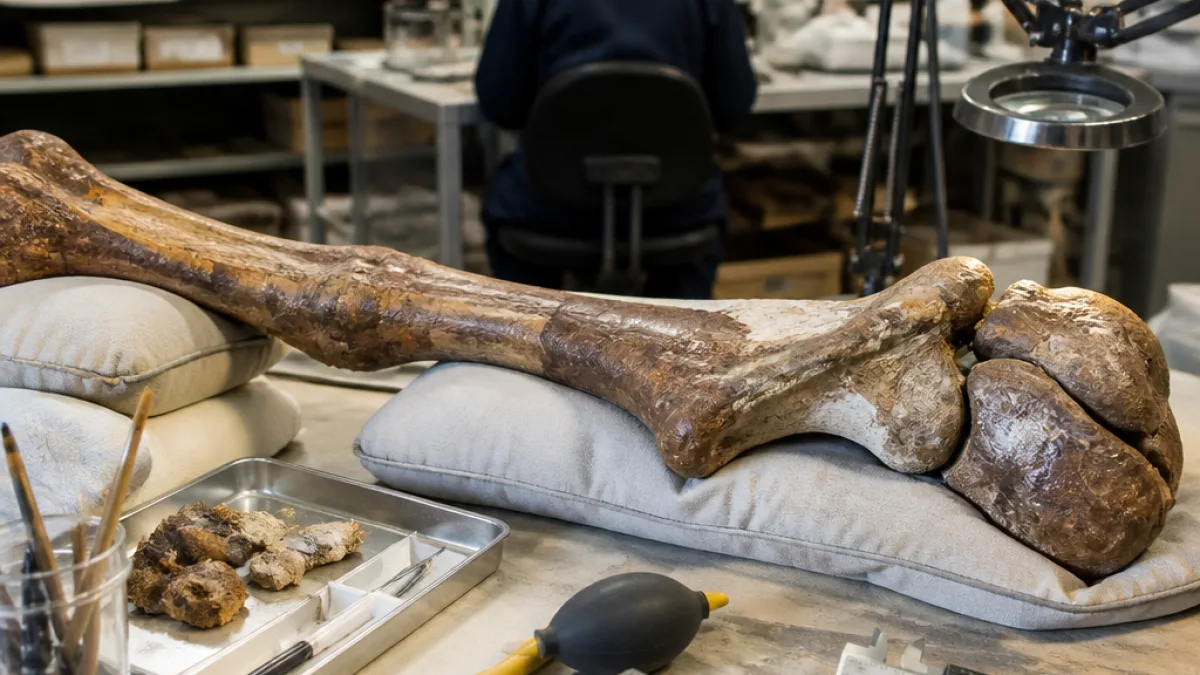
Scientists at the Natural History Museum have named a new genus and species of iguanodontian dinosaur from fossil material unearthed near Ewhurst in Surrey and held in the museum’s collections for more than two decades. The animal, Paludohadros proudlovii, lived about 125 million years ago in muddy wetlands that covered southern England during the Early Cretaceous, researchers said.
Discovery and naming
The specimen was discovered at Wienerberger’s Ewhurst brick and roof tile works in 2001 and later donated to the Natural History Museum, the museum said. After detailed study and comparison with other European iguanodontians, curators and palaeontologists concluded the remains represent a new genus and species and published the name Paludohadros proudlovii in the Journal of Systematic Palaeontology, according to the museum and reporting by the Independent.
The genus name draws on the Latin word palus, meaning swamp, a nod to the wetland environment inferred for the animal’s habitat. The species name, proudlovii, honors Will Proudlove, a former manager at the Ewhurst works who died shortly before the specimen was excavated.
“Sadly, this dinosaur was only discovered the year after he died, but its story has become a part of our lives since then,” said Rachael Proudlove, Will Proudlove’s wife.
What the fossils show
The described individual was a four‑legged herbivore in the iguanodontian group, a lineage known for distinctive thumb spikes. The specimen measured about 5 meters (16 feet) long and researchers estimated a mass around 1.5 to 2 tonnes, roughly comparable to a rhinoceros. Because some bones appear not to have been fully fused, authors of the study suspect the specimen was a juvenile and that adults of the species may have reached larger sizes.
- Found in 2001 at Ewhurst Works in Surrey and later donated to the Natural History Museum
- Named Paludohadros proudlovii and dated to the Early Cretaceous, about 125 million years ago
- Estimated length ~5 m and weight 1.5–2 tonnes; likely a juvenile specimen
The reclassification follows recent work reevaluating iguanodontian material from southern England. A 2023 redescription of the related Mantellisaurus and subsequent reassessments have prompted palaeontologists to separate specimens formerly assigned to Iguanodon or Mantellisaurus into distinct genera, the Natural History Museum said.
Paludohadros was found not far from the 1980s discovery site of the large Cretaceous predator Baryonyx, which has been interpreted as a fish and small‑dinosaur eater. Museum researchers said the two animals would have occupied the same swampy landscape in southern England during the Early Cretaceous.