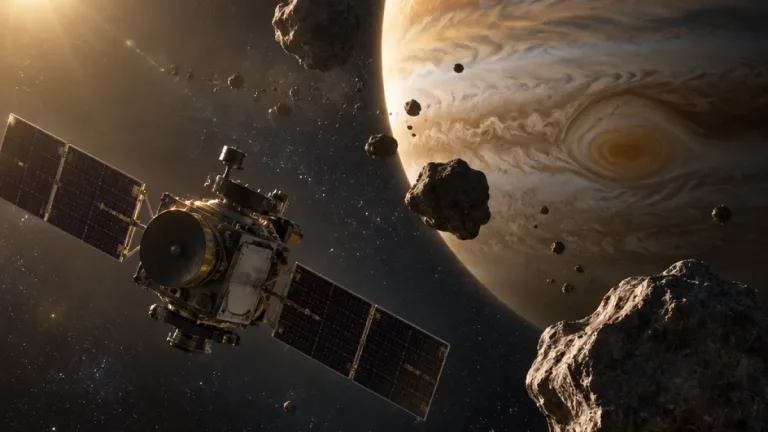
Researchers at Sandia National Laboratories are studying whether bursts of nuclear-generated X-rays could push an asteroid off a collision course with Earth without shattering it into multiple dangerous pieces. The work focuses on a problem that can be overlooked in simplified planetary-defense calculations: asteroids are generally not smooth spheres.
The researchers published their findings in Icarus, a scientific journal that covers planetary science. Their simulations examine how an X-ray burst could affect an asteroid with an uneven, irregular shape. The objective is to understand how much the object might move and how its shape would influence the response.
Moving an asteroid without breaking it apart
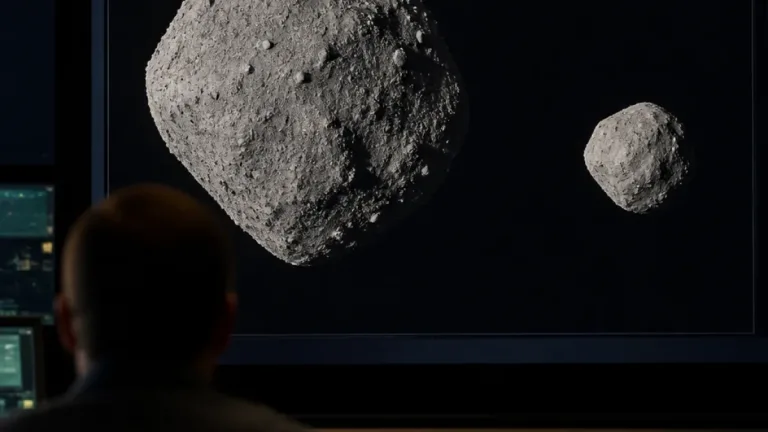
Earlier computer models often represented a potential asteroid threat as a sphere. Sandia researcher Nathan Moore said that assumption made the mathematics easier, but it did not reflect the varied forms of real asteroids. An irregular object could absorb energy and shift in ways that differ from a uniformly shaped body.
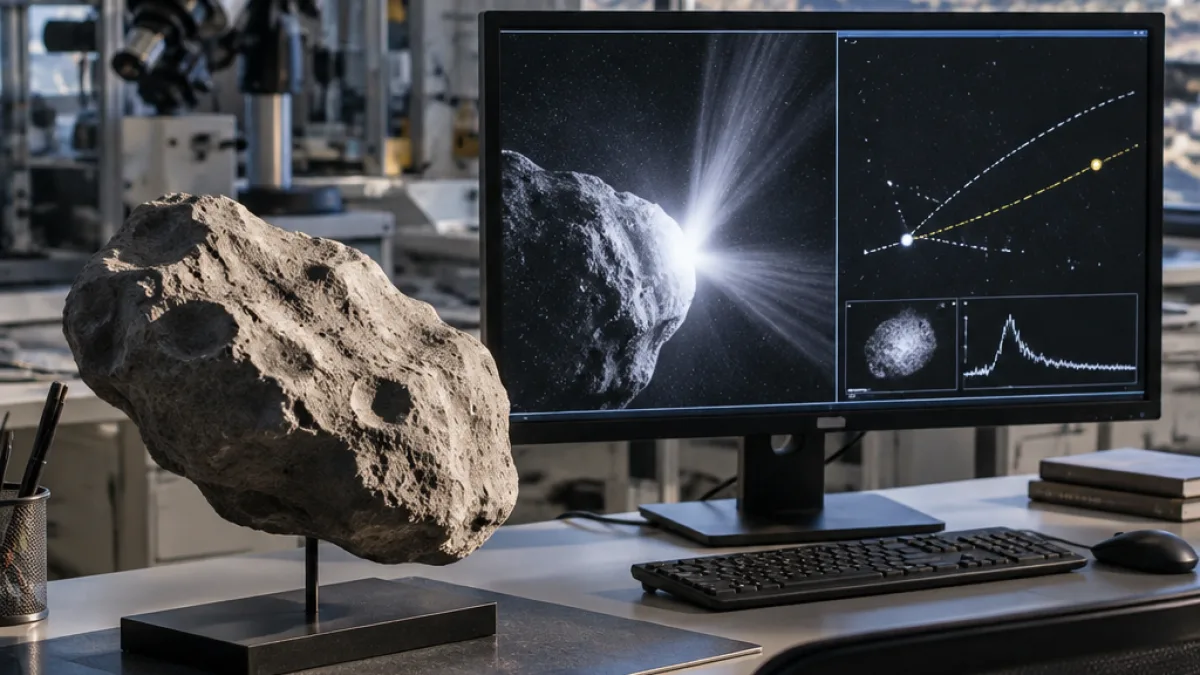
The new simulations are intended to reduce uncertainty in modeling that response. The study examines a nuclear X-ray burst as a means of transferring energy to the asteroid’s surface. That energy could vaporize some material and produce a reaction that changes the asteroid’s trajectory. The research is focused on deflection rather than destroying the object.
- The simulations model asteroids with irregular shapes rather than idealized spheres.
- The proposed approach uses nuclear X-rays to alter an asteroid’s path.
- The researchers seek to avoid fragmenting an asteroid into pieces that could still reach Earth.
A complete breakup could create a different hazard from the original impact threat, because fragments might continue toward Earth along separate paths. Sandia’s work therefore considers the challenge of changing an asteroid’s course while preserving the object’s overall integrity. The findings address the physical modeling needed to evaluate that balance.
A study within planetary defense research
Asteroid deflection research examines methods for changing the path of an object before a possible impact. The Sandia study does not describe an asteroid intervention or a nuclear test. It presents computer simulations designed to improve calculations for an irregularly shaped body and to reduce the guesswork involved in evaluating a potential response.
The research adds shape and fragmentation concerns to the analysis of nuclear planetary-defense concepts. By moving beyond the spherical models used in earlier simulations, the Sandia team is examining how the geometry of a real asteroid could affect the outcome of a deflection attempt.