An international team of scientists has identified a possible genetic link between the asteroid-associated mass extinction about 66 million years ago and the later diversification of ants. The researchers found that mobile DNA segments known as transposons, or “jumping genes,” were more common in ant lineages that went on to contain more living species.
The study, led by Lukas Schrader of the Institute for Evolution and Biodiversity at the University of Münster in Germany, was published in Science Advances. Its findings suggest that the environmental disruption at the beginning of the Paleogene may have coincided with bursts of transposon activity in several major ant groups. The researchers described that activity as one factor that may have supplied genetic variation during a period of evolutionary change.
Comparing ant genomes
Transposons are stretches of DNA that can move to new locations in a genome and make additional copies of themselves. Scientists once viewed them mainly as genetic parasites because they can multiply without an obvious benefit to the organism and, in some cases, interfere with normal genetic function. More recent research has also examined whether their movement can create genomic variants that evolution can use.
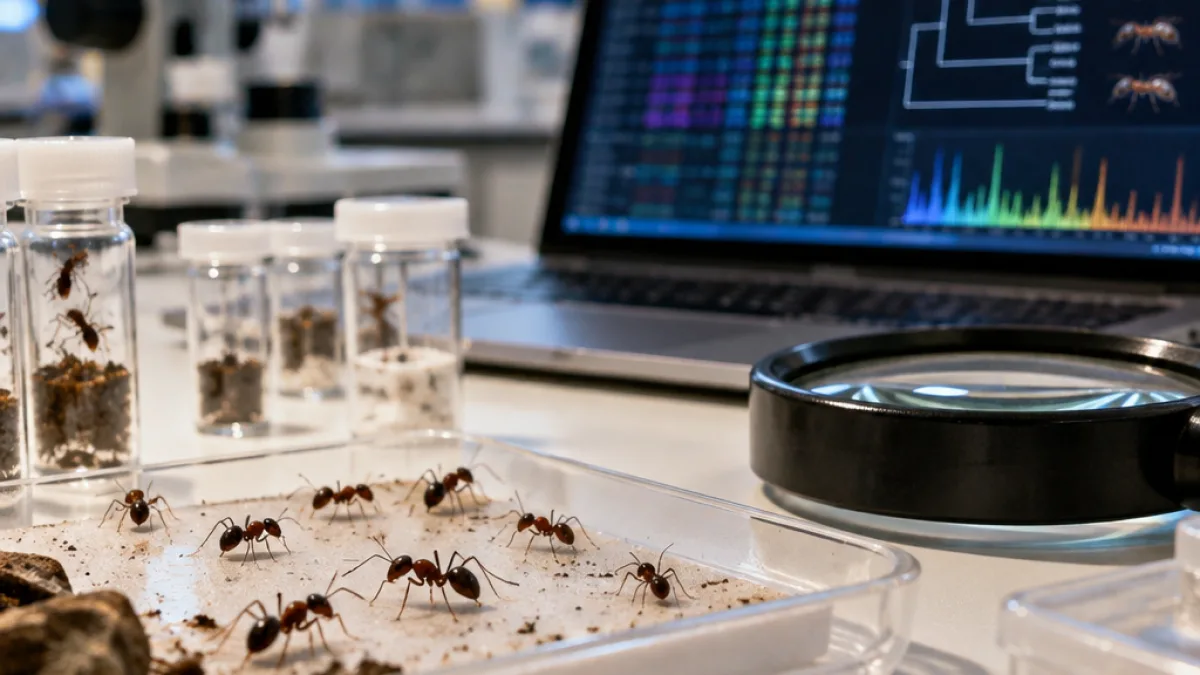
To investigate that possibility in ants, the team compared genomes from representatives of different evolutionary lineages. The researchers reported that lineages with higher numbers of transposons also generally had greater species diversity. They also examined when the elements appeared to be especially active. In several major groups, periods of increased activity occurred near the start of the Paleogene, which began around the time of the asteroid-linked global extinction.
- The study examined the relationship between transposon abundance, activity and the number of living species in ant lineages.
- Several major lineages showed increased transposon activity before periods of rapid diversification.
- Ants now include more than 15,000 species worldwide.
A possible connection to social behavior
The researchers proposed that mobile genetic elements may have contributed to genetic mechanisms involved in ants’ social lives. Those mechanisms include the ability to recognize chemical signals and interact with other members of a colony. Ant societies depend heavily on chemical communication, but the study describes transposons as a possible contributor to the underlying genetic variation rather than as a single explanation for ants’ evolutionary success.
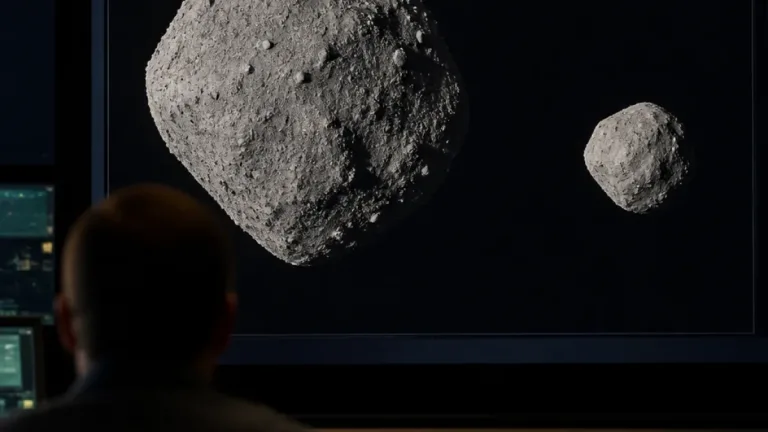
The timing of the changes was central to the team’s interpretation. The asteroid impact produced major environmental consequences, and the researchers identified a genomic process that may connect that ecological upheaval with later changes in ant lineages. Their results therefore present a proposed evolutionary pathway: environmental disruption was followed by changes in mobile DNA activity, which were associated with diversification in some groups.
The findings do not establish that the asteroid impact directly caused the genetic changes or that transposons alone determined which ant lineages survived and diversified. Instead, the study identifies a recurring association across genome comparisons and evolutionary timing. Further work on the genetic mechanisms involved would be needed to test how mobile DNA may have influenced chemical recognition, social interaction and species formation in ants.