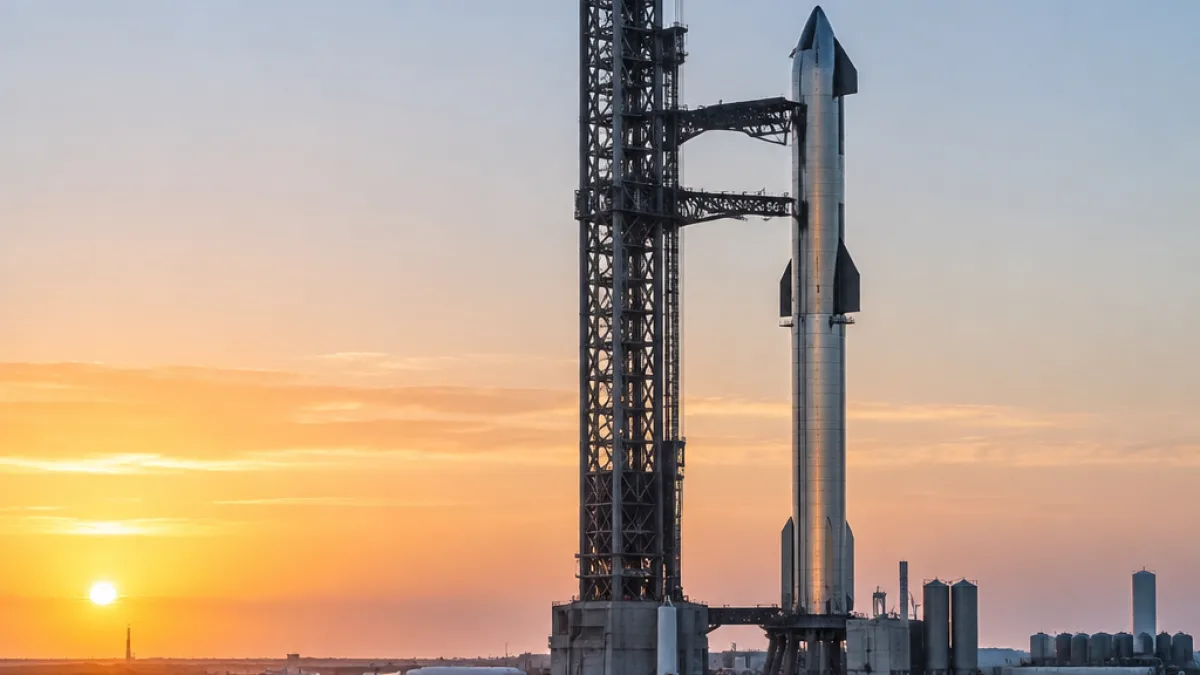
SpaceX is preparing for its most ambitious Starship test flight yet, with a plan to recover both stages of the giant rocket at the company’s South Texas launch site. The attempt is targeted for Friday, pending approval from the Federal Aviation Administration.
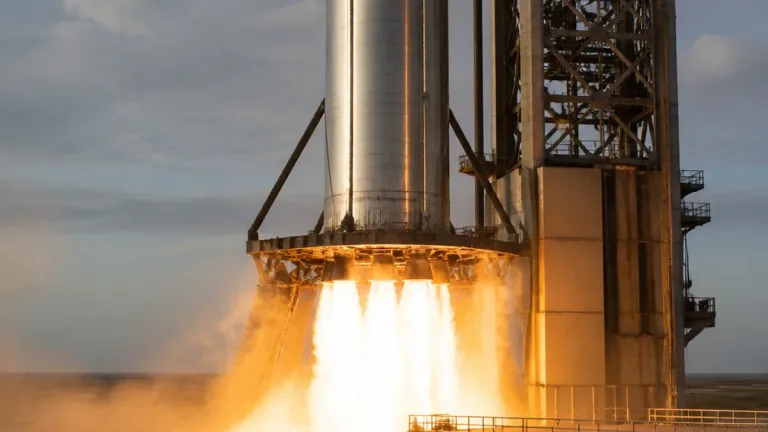
The flight is expected to last about 22 hours. After liftoff, the Super Heavy booster would return to Starbase roughly six minutes later and be caught by mechanical arms attached to the launch tower. The Starship spacecraft, known as the ship, would continue into orbit before steering back toward the same site on Saturday.
SpaceX has previously caught Super Heavy boosters at Starbase, which is near the U.S.-Mexico border. This flight would be the first attempt to catch the upgraded ship itself. The production version being tested measures about 236 feet, or 72 meters, according to The Associated Press.
“It’s hard to describe how I’m going to feel when we pull this off. It’s so incredibly exciting. It’s such a feat of engineering.”
— Kiko Dontchev, SpaceX vice president of launch
Dontchev made the comments at a NASA technology summit last week at the Kennedy Space Center in Florida. A successful recovery would extend SpaceX’s reuse strategy from the rocket’s lower stage to the entire vehicle. The company has said that frequent reuse is central to its plans for launching at a faster and more consistent pace, including missions intended to support moon bases and crewed trips to Mars.
A long orbital test
Once in orbit, Starship is planned to deploy 26 Starlink satellites, the company’s most advanced satellites, before completing about 15 circuits of Earth. The spacecraft is expected to fly at an altitude of approximately 170 miles, or 275 kilometers, during the test.
- The Super Heavy booster would attempt a tower catch about six minutes after liftoff.
- The ship would remain in orbit for about 22 hours before returning to Starbase.
- The mission would deploy 26 Starlink satellites and test recovery of the upgraded upper stage.
The two recoveries would require separate precision maneuvers. The booster would have to guide itself back to the launch area shortly after separation, while the ship would need to complete its orbital mission, reenter the atmosphere and approach the tower the following day. Both vehicles would then be grasped in midair by the tower’s mechanical arms.
SpaceX’s previous booster catches provide experience with recovering the lower portion of the rocket, but the ship faces a different test because it travels to orbit and must withstand the return from space. The company’s stated goal is to retrieve the hardware for reuse rather than discard it after launch. The Friday mission is designed to test that approach across the full Starship vehicle.